




Where to stay on a luxury holiday in the Italian Lakes
Cities and towns in the Italian Lakes
With so many lakes covering such a wide geographical area, it would be impossible to list all the cities, towns and villages in the Italian Lakes here. But these are what we would consider the principal, most famous ones.
Luxury holidays in Milan
Introduction to Milan
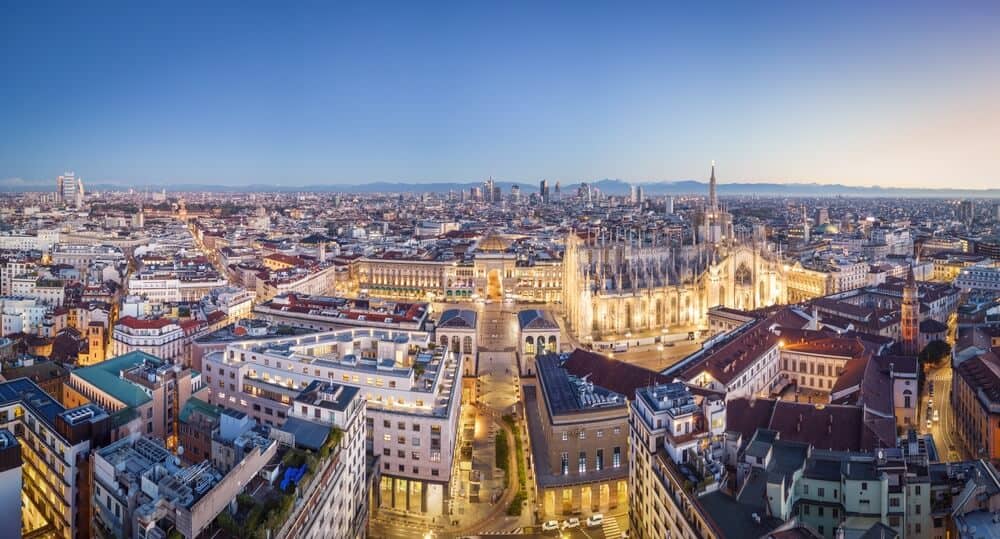
Often referred to as the ‘gateway’ to the Italian Lakes, Milan is the second most populous city in Italy. It is a global design and fashion capital, hosting both a Spring-Summer and Autumn-Winter fashion week. However, it can also boast a rich history. Home to iconic landmarks such as the Duomo, the Galleria Emanuele II, the La Scala opera theatre and the Sforzesco Castle, it is a centre of art and culture.
Milan is also home to one of the world’s most famous paintings – Leonardo da Vinci’s The Last Supper – which is kept in kept in the Convent of Santa Maria delle Grazie. This is certainly not the only painting of note in the city. The Sforzesco Castle in Milan is home to several of Milan’s museums including the Pinacoteca which houses a superb collection of Italian paintings and sculpture. Or, for more modern artworks, head to the Museo del Novecento in the Piazza del Duomo. This museum is home to a wealth of twentieth century Italian art, including works by Picasso, Kandinsky and others.
With just as much to see and do indoors as there is outdoors, there are plenty of things to do in Milan when it rains.
Tips for navigating the city
Milan is an easy city to navigate thanks to a super efficient public transport system. The city has not only an excellent bus network but also has a tram and subway service too.
The metro system in Milan is often the quickest way to get around the city. It has five different lines: M1 (red line), M2 (green line), M3 (yellow line), M4 (blue line) and M5 (lilac line). In addition, it also has the Milan Passante railway. This is an underground railway which has just 6 main stops in the city – Porta Vittoria, Dateo, Repubblica, Porta Venezia, Porta Garibaldi and Domodossola.
Milan subway trains run as often as every few minutes during rush hour. Tickets can be purchased in the metro station at an ATM ticket machine. Before getting on the train, validate your ticket and then go through the turnstile. The ticket is then valid for 90 minutes after stamping. Tickets must also be validated when leaving the station.
Children under the age of 14 years old are able to travel free of charge with an accompanied adult.
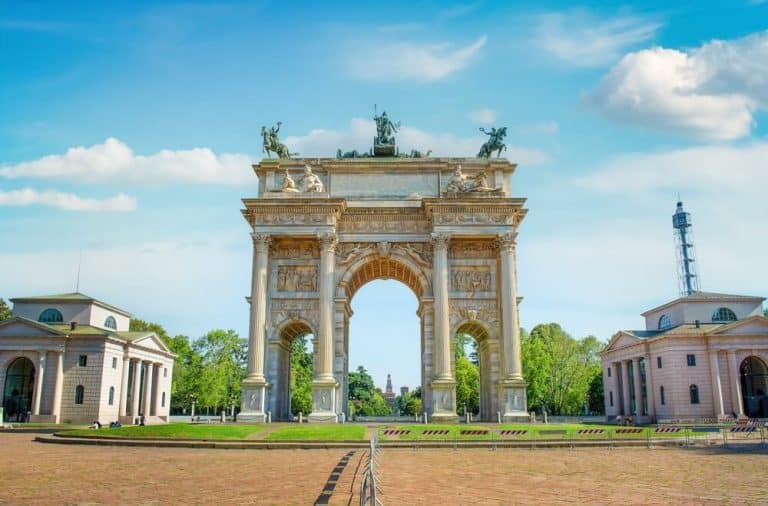
The trams and buses also provide a wide range of routes throughout Milan. These can also be a better way to see more of the city, especially if moving between different neighbourhoods.
If you are in Milan for a few days, a good option is to purchase a Yes Milano City Pass. This official city pass will give you 3 days of unlimited travel on trams, buses and metro lines (zones M1-M3). It also provides access to a number of Milan’s top attractions, museums and landmarks, enabling you to skip any ticket lines.
Taxis are readily available in Milan. And finally, there is BikeMi. This is a public bike sharing system which allows you to pick up and return bikes at any of the 325 designated stations around the city. Both traditional bikes and e-bikes are available.
Accommodation and dining recommendations
It is well worth spending 48 hours in Milan to do justice to the city. The good news is that there are plenty of accommodation options if you do want to stay overnight including plenty of Milan hotels,
Our favourite wine bar in the city is Cantine Isola. You’ll be mixing with the locals here. If you can’t find somewhere inside to sit, grab a crate and just sit in the street outside!
Milan is packed full of superb restaurants. If you are looking for fine dining, then there are well over a dozen restaurants in Milan with Michelin stars.
For the best steak in Milan, we recommend you head to Varrone. Or for a unique dining experience, you can’t beat tucking into the Spider Crab Vermicelli at La Granseola.
Luxury holidays in Verona
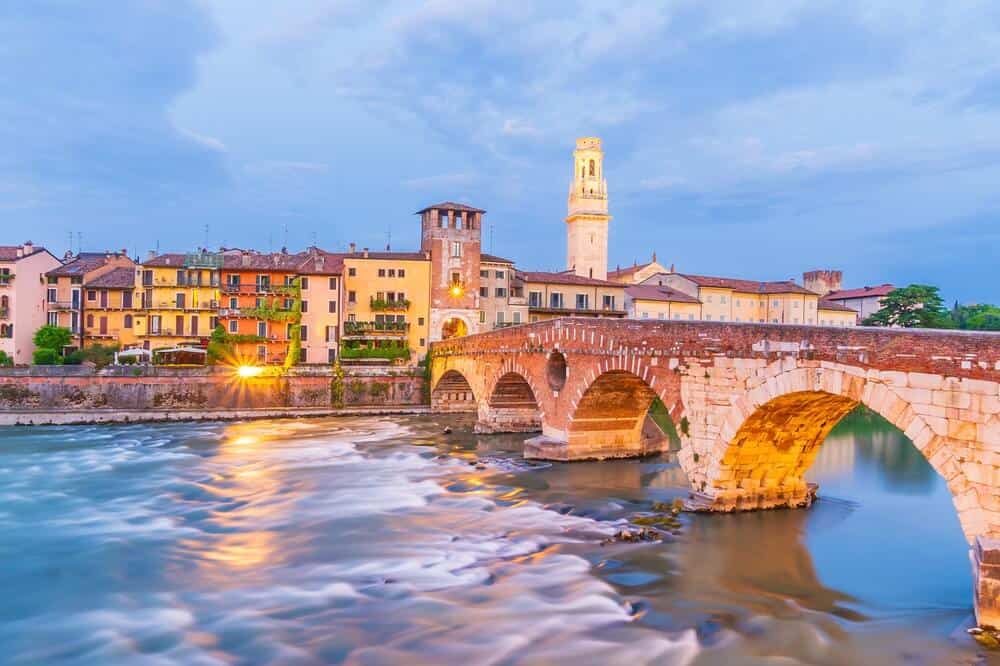
Introduction to Verona
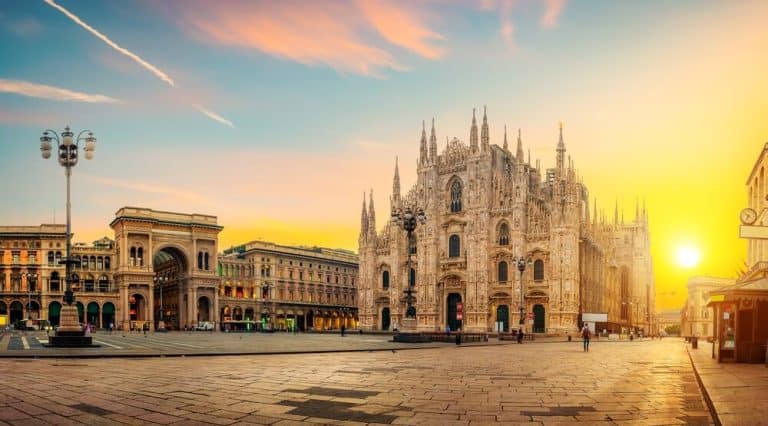
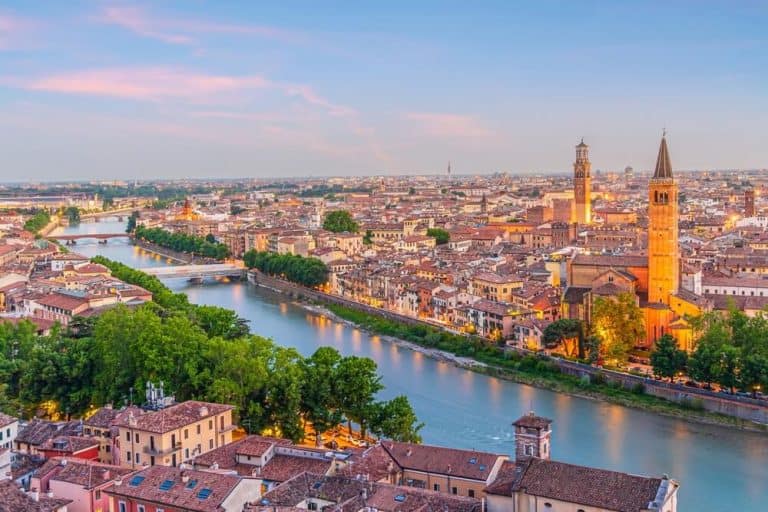
There is little not to like about Italy’s most romantic city, Verona. One of Italy’s UNESCO World Heritage sites, it is home to a rich collection of Roman remains as well as some incredible examples of Romanesque, Medieval and Renaissance art and architecture too.
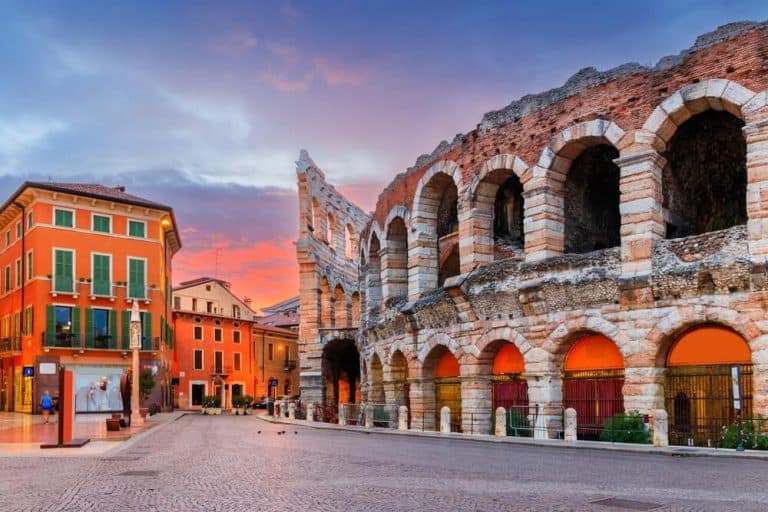
The Piazza Bra is Verona’s largest square and is where you will find the Arena di Verona. This is the third largest Roman amphitheatre in Italy, behind the Colosseum in Rome and the amphitheatre in Capua. If you can, visit during the Summer annual opera festival to view one of the performances that still take place there. It is an incredible experience. This square is also a great place to grab a coffee at one of the many bars and cafes that line it and just enjoy a spot of people watching!
The other main square in Verona is the Piazza delle Erbe. This sits on the site of what would have been the old Roman forum. Important buildings line each side of the piazza. These include the ancient town hall – Torre dei Lamberti – along with the Casa dei Giudici, the Casa Mazzanti, the Palazzo Maffei and the Casa dei Mercanti (House of the Merchants). In the centre of the square is a fourteenth century fountain atop which sits a much earlier statue dating back to 380 AD called Madonna Verona.
Of course, when in Verona, paying a visit to the balcony of Romeo and Juliet at the House of Giulietta is also a must. And to get a great view of Verona, climb the 368 steps on the spiral staircase to the top of the 84 metre high Torre dei Lamberti (or use the glass elevator instead)!
Tips for navigating the city
Much of Verona is a ZTL (Zona a Traffico Limitato) where access by car is severely restricted. As a result, it’s worth leaving your car outside the city and get about on foot or using public transport. It’s certainly easy to walk between Verona’s attractions as the city is relatively compact.
However, should you want to use public transport, buses run from 5 in the morning until midnight. You can buy tickets for single journeys. Or, alternatively, you can purchase 1, 3 or 7 day passes for unlimited travel.
We recommend investing in a Verona Card. You can opt for a card that is valid for either 24 or 48 hours. This will give you unlimited free travel on the ATV transport system as well as free or reduced entrance tickets to dozens of Verona’s museums and attractions.
An eco friendly alternative to the buses is to travel by bike. You can either hire bikes in the city or use Verona Bike. This allows you to pick up and drop off bikes at any of the many stations dotted around the city.
Accommodation and dining recommendations
Whilst Verona is a great city for a day trip, to do justice to the city, it’s worth staying for at least one night. Two days provides more than enough time to see everything in Verona’s central area, although admittedly three days would allow you to view it all at a more relaxed pace.
If you can, we recommend you stay in the historic centre of Verona. The good news is that there are plenty of accommodation options there including plenty of Verona hotels. However, if you’re only in the city for a night, you may also want to consider staying near the train station. This is only just outside the historic centre and so a short walk will get you to all the main attractions. At night, this area is also a little livelier with plenty of restaurants and bars so may suit a younger traveller. Alternatively, if you’re travelling to Verona on a budget, look for accommodation in Veronetta, the university district. Or, if you’re after the most authentic feel to your stay, head across the Adige River to the San Zeno district. Less visited by holidaymakers, it has a quieter, more peaceful vibe.
Visitors to Verona are spoiled for choice when it comes to eating out. The city is packed full of excellent restaurants.
Breakfast in Verona is sweet – the Veronese definitely like to start the day with something sugary. Otherwise, at lunch and dinner, you will find frequently find risotto on the menu. It’s worth sampling the Risotto all’ Amarone. Made using the local red wine, the result is a vibrant shade of purple packed with flavour.
For the ultimate foodie experience in Verona, and to experience the warmth of Italian hospitality, book dinner with a local.
Luxury holidays in Stresa
Introduction to Stresa
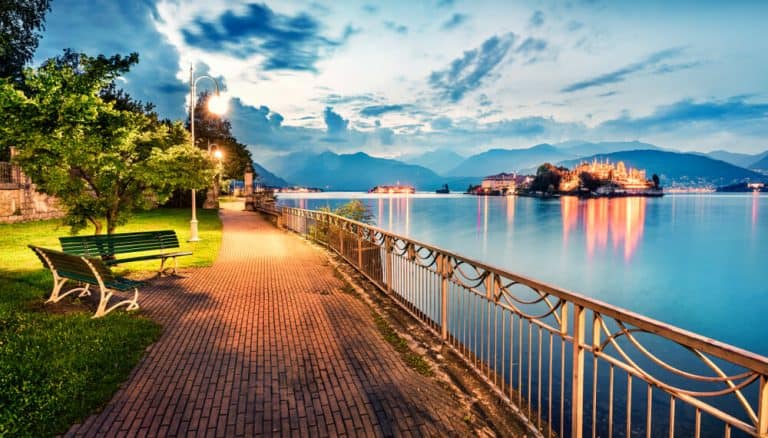
Stresa is Lake Maggiore’s most famous lakeside town. It has attracted writers and artists since the era of The Grand Tour of the mid nineteenth century. It is a town that is easy to explore on foot. And, in fact, if you are a keen hiker, there are some longer routes that can be enjoyed that take you beyond Stresa itself. One lovely walk is the Chestnut Route. The walk takes approximately 2.5 hours but takes you to some of the small hamlets between Stresa and nearby Belgirate. You can then return to Stresa by either boat or train.
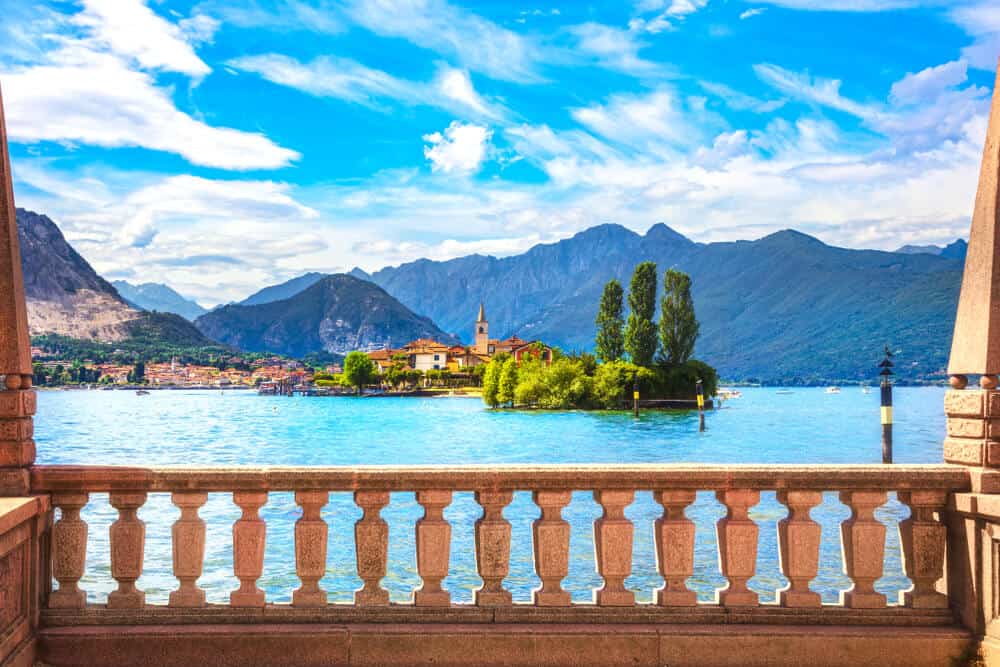
Stresa is also a great base from which to explore the beautiful Borromean Islands – Isola Madre, Isola Bella and Isola Pescatori. Of these, only Isola dei Pescatori is inhabited. It was traditionally home to the lake’s fisherman. Even today, it’s still home to some of the best fish restaurants in the area. The gardens of Isola Madre and Isola Bella are stunning, especially in the Spring when the azaleas, camellias and rhododendrons are all in full bloom. Keep an eye out for the famous white peacocks on Isola Bella and the budgerigars flying above you on Isola Madre.
Isola Bella is also home to a beautiful 17th century Baroque palace that was built on the orders of Carlo III for his wife, Isabella d’Adda. Much of the palace is open to visitors and it’s definitely worth enjoying a tour of its splendid rooms and grottoes.
Back on the mainland in Stresa, there are also other incredible villas to admire. Many of these are now upmarket hotels such as the Grand Hotel des Isles Borromees where the author Ernest Hemingway once stayed.
Tips for navigating the city
Stresa is a town that is easy to explore on foot. And, in fact, if you are a keen hiker, there are some longer routes that can be enjoyed that take you beyond Stresa itself. One lovely walk is the Chestnut Route. The walk takes approximately 2.5 hours but takes you to some of the small hamlets between Stresa and nearby Belgirate. You can then return to Stresa by either boat or train.
Alternatively, head to the Mottarone mountain that sits above Stresa to enjoy hiking or skiing (dependent on the season)! Here, on a clear day, you can enjoy one of the most beautiful sights of any of the lakes – 360 degree views from the Po Valley to the summit of the Alps with views of 7 lakes – Lake Maggiore, Lake Orta, Lake Mergozzo, Lake Varese, Lake Comabbio, Lake Monate and Lake Biandronno. You can walk all the way back from the summit to Stresa, stopping at the Alpine Gardens half way down. It will take you about 4 hours to complete
Accommodation and dining recommendations
If staying overnight in Stresa, there are plenty of accommodation options on offer, suitable for all budgets. These include hotels in Stresa, B&Bs as well as Stresa apartments too. Just be aware that, whatever option you choose, you will need to pay a tourist tax. In Stresa, the tourist tax applies to all accommodation but the amount depends on the type and rating of your hotel or holiday rental. Typically, costs are between €1 and €2.50 per person per night. Wherever you stay, you will also need to provide a copy of the ID document of each person in your party.
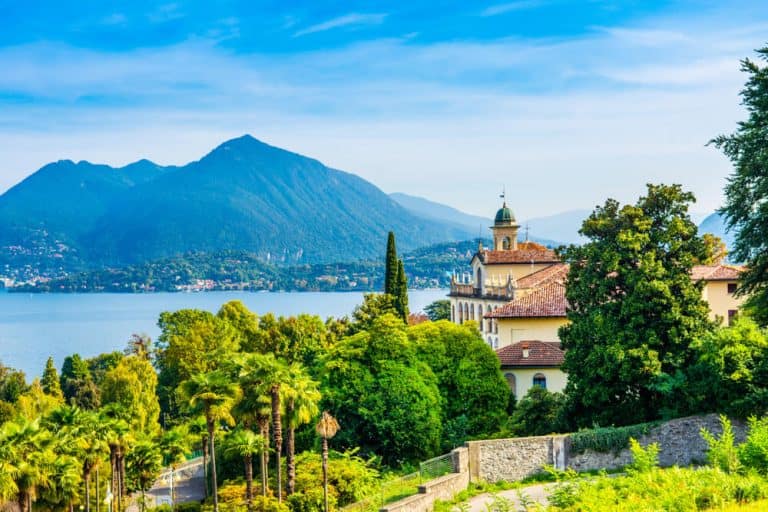
It’s certainly worth staying in Stresa long enough to enjoying lunch or dinner if you can. One of our favourite eateries in Stresa is Il Vicoletto, a popular restaurant tucked away in Stresa’s narrow streets. Alternatively, head to Il Clandestino, a fine dining fish and seafood restaurant. For superb fish dishes, another option is to head to Il Verbano, a Michelin star restaurant on Isola dei Pescatori.
Whilst Stresa is the most well-known of any of the towns on Lake Maggiore, it is by no means our favourite. Instead, that accolade would go to either Canobbio or Cannero, both much more hidden gems on Lake Maggiore. Discover all the Lake Maggiore towns and villages here.
Luxury holidays in Como
Introduction to Como
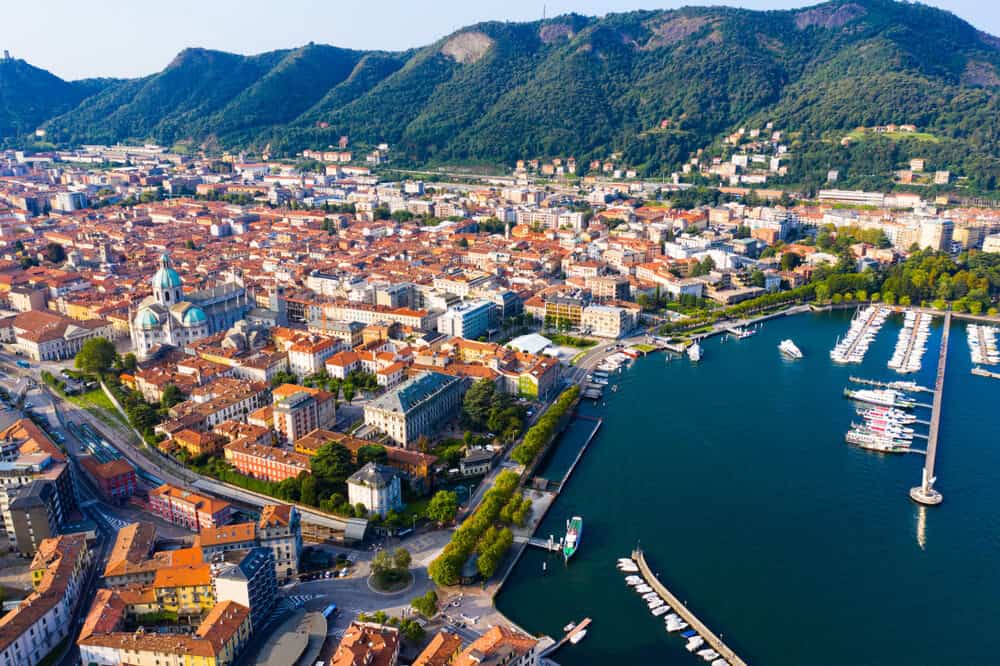
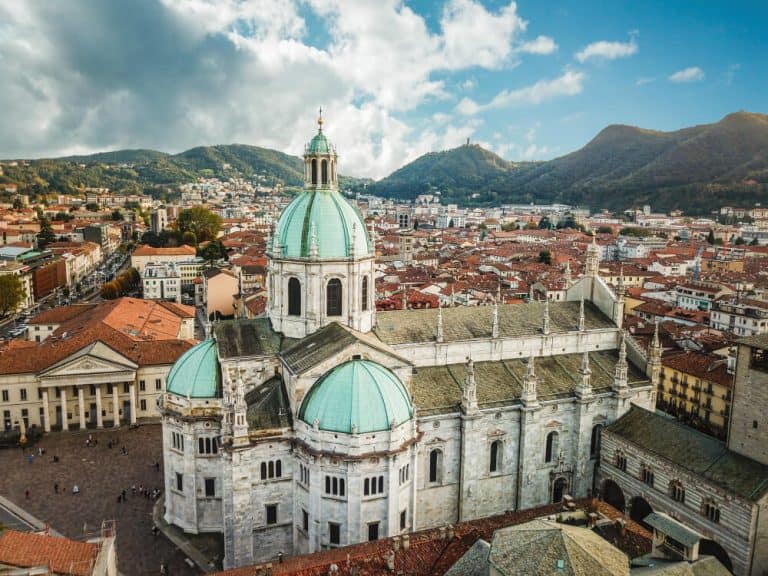
Como is Lake Como’s largest town and sits at the southern tip of the lake. Like Stresa, it was a favourite stopping point on the Grand Tour of centuries ago. These days, it boasts a long lakefront promenade which passes through one of the town’s main squares – the Piazza Cavour. This is where you will also find the Teatro Adriano and Chiesa Valdese. This isn’t the only church in Como worth visiting. Also of note is the Cattedrale di Santa Maria Assunta along with the smaller Basilica di Sant’ Addondio, with its blue and gold ceiling.
What we love to do most in Como is to simply wander through Como’s charming streets. It’s a popular shopping destination and there are some lovely independent shops and boutiques here. It is possible to trace the origins of Como’s silk industry back to the fourteenth century. But it was in the eighteenth and nineteenth centuries that the silk and textile industries were at their peak here. Whilst the industry may have waned since then, Como is still a great place to shop for these items.
For those visiting Como in the hot Summer months, there is also a lido in town – Lido Villa Olmo. This has lake access as well as a swimming pool and extensive areas simply for sunbathing and relaxing. There is also a popular beach bar and café.
Tips for navigating the city
Como is an easily walkable city, with many attractions within a pleasant stroll of one another. Of course, should you need to use it, there is a bus service too. Buses in Como are run by ASF Autolinee. They boast a fleet of eBus electric buses which are both comfortable and quiet. They have both urban services within the city and extra urban lines to take passengers from Como to other towns and villages on the lake. The main bus station is in Piazza Matteotti. However, some of the extra urban lines will also stop at the train station. Purchase tickets online at DropTicket.
Como also boasts a more unusual mode of transport. Anyone visiting for the first time should set aside time to take the 7 minute funicular ride from the lakeside at Como up to the village of Brunate. Once at the top, there is a café where you can enjoy a drink whilst admiring the views down over Como and across the lake. We also recommend you make the effort to walk the 20 minutes from the summit to the Volta lighthouse. Volta was the inventor of the electric battery. He was born in Como and, despite his international fame, returned to the town to continue his research until his death in 1827. The lighthouse is amazing and the 360 degree views from it are magnificent.
Accommodation and dining recommendations
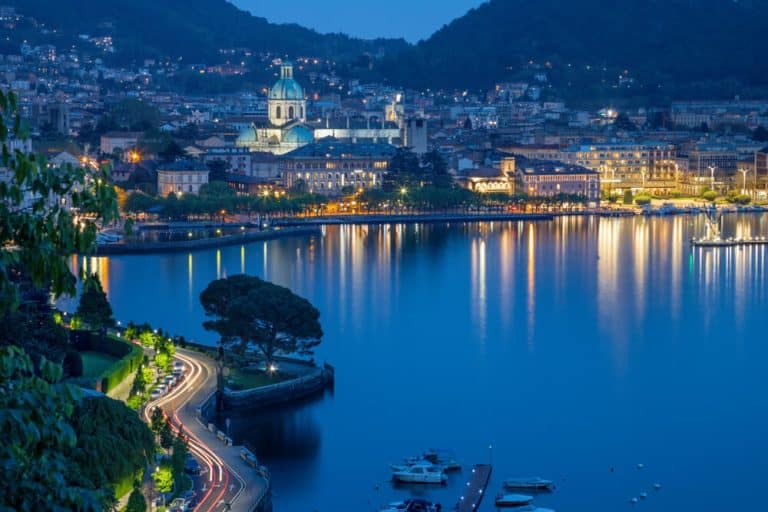
There are plenty of accommodation options in Como. These include hotels in Como, B&Bs as well as Como villa rentals too.
If you spend an evening in Como, try and time it so that you can enjoy a performance at the Teatro Sociale. It’s an absolutely beautiful setting to enjoy the opera. Combine it with dinner at one of Como’s many restaurants. Kitchen Como is a 1 star Michelin restaurant and one of our favourite places to eat in Como. We always love La Cava dei Sapori.
Luxury holidays in Bellagio
Introduction to Bellagio
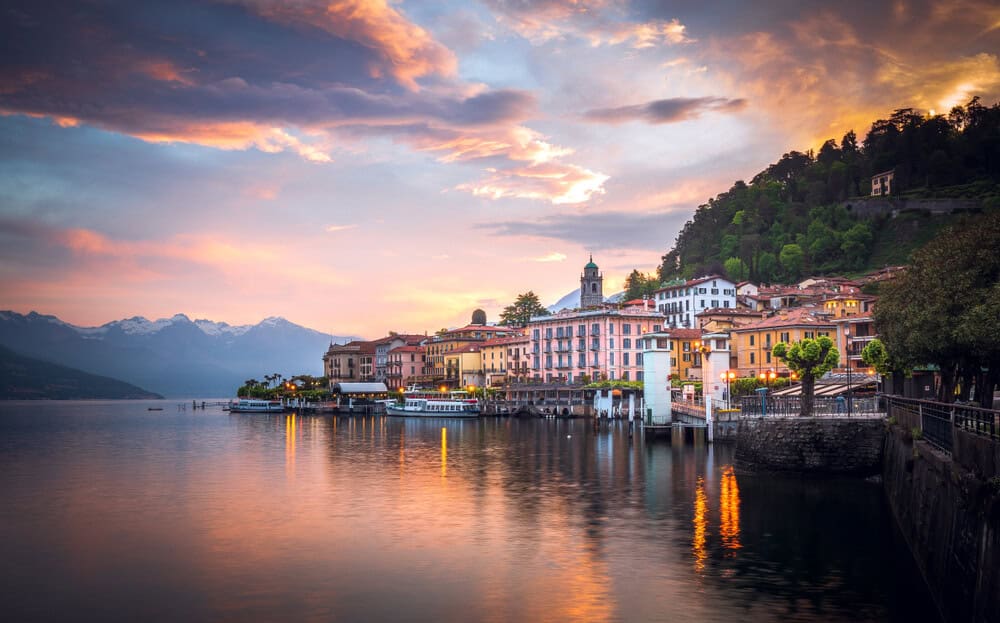
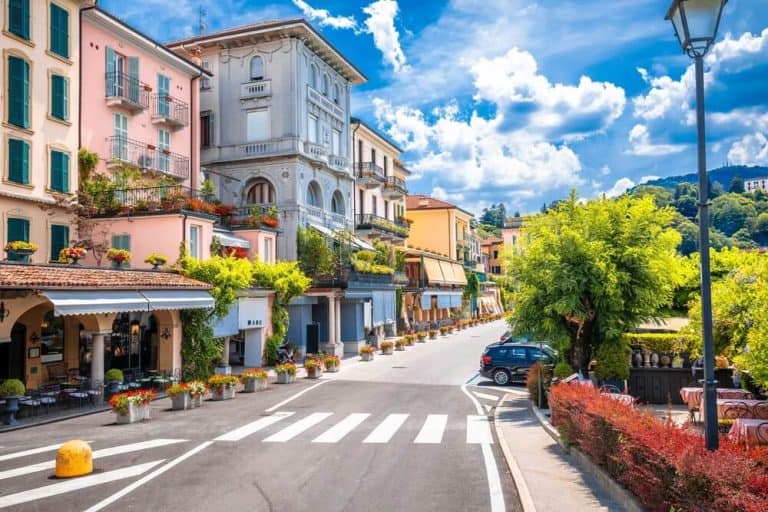
Bellagio may not be Lake Como’s biggest town but it’s definitely its most famous! Known as ‘the pearl of Lake Como’ it boasts some impressive lakeside villas which have magnificent gardens open to the public – Villa Melzi and Villa Serbelloni (now a hotel). It also has a charming historic centre, characterised by narrow cobbled streets, alleyways and piazzas. Window boxes are festooned with flowers and it is certainly rather idyllic, albeit frequently too busy for our liking. Sadly, Bellagio’s popularity has brought with it boatloads of holidaymakers which, at times, overrun the town.
To escape, we recommend heading just out of town. A pathway and steps take you uphill from Bellagio to the nearby picture postcard fishing village of Pescallo. It’s a world away from the crowds of Bellagio and a great viewpoint. Alternatively, whilst no guide to the Italian Lakes could exclude Bellagio. if you want to avoid the crowds and tourist traps, perhaps consider visiting neighbouring Varenna instead. Use our guide to the towns of Lake Como to discover more about Varenna and all the other lakeside villages.
Tips for navigating the city
On a practical level, we don’t recommend you come by car to Bellagio if you can avoid it. Parking can be extremely tricky, certainly between April and October. And the historic centre is a fully pedestrianised ZTL area. Instead, come by boat if you can.
Once in Bellagio, the town can easily be explored on foot. However, Bellagio is renowned for its narrow cobbled streets and uneven staircases. These are charming and add to its character but may cause difficulty for those with mobility issues. It is worth heading to the upper part of the town if you can though – the views over Lake Como get more magnificent the higher you go.
Accommodation and dining recommendations
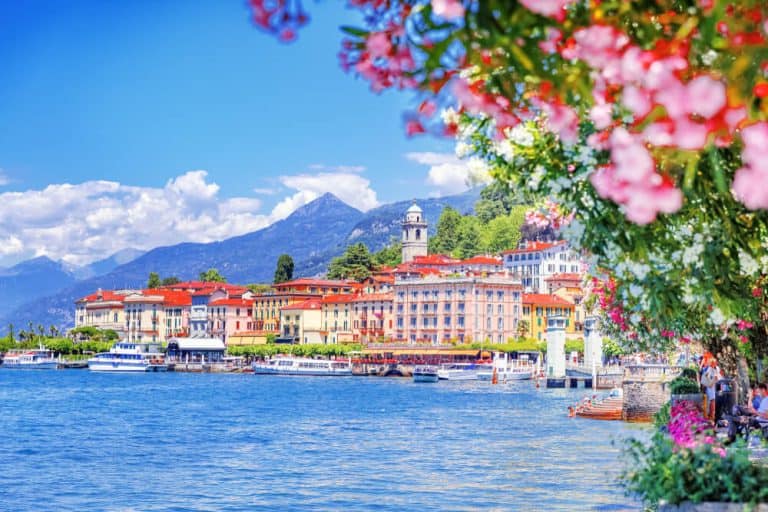
There are a wide variety of accommodation options in Bellagio. These include grand hotels in Bellagio such as Villa Serbelloni to more intimate, family run B&Bs. Alternatively, you could opt for a luxurious Lake Como villa rental instead. These usually provide more space and privacy for holidaymakers and can be a particularly good option for families.
Even if you’re not staying in Bellagio, if you have time to eat out here, then our favourite restaurant is definitely Salice Blu. The food here is contemporary Italian. Each course on their five and seven course tasting menu seems to get better and better, just when you thought it was impossible to do so. And, if you’re stuck for a taxi back to your Bellagio hotel, they’re likely to find a waiter happy to chauffeur you home!
Luxury holidays in Orta San Giulio
Introduction to Orta San Giulio
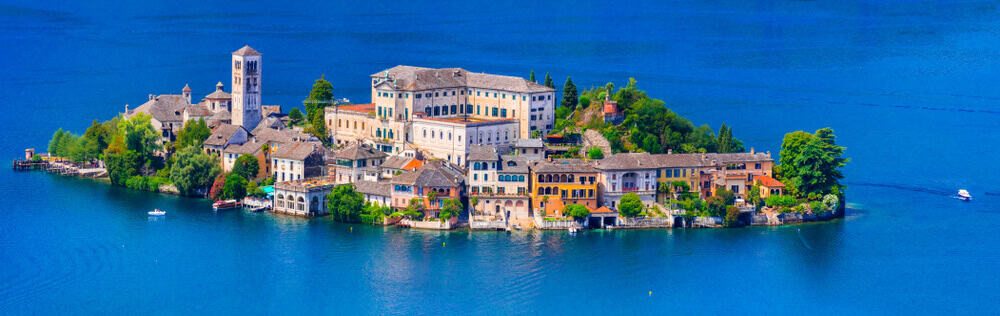
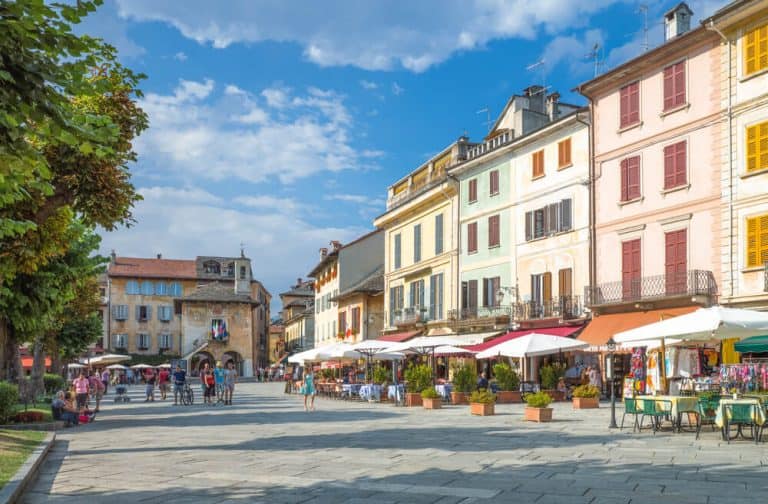
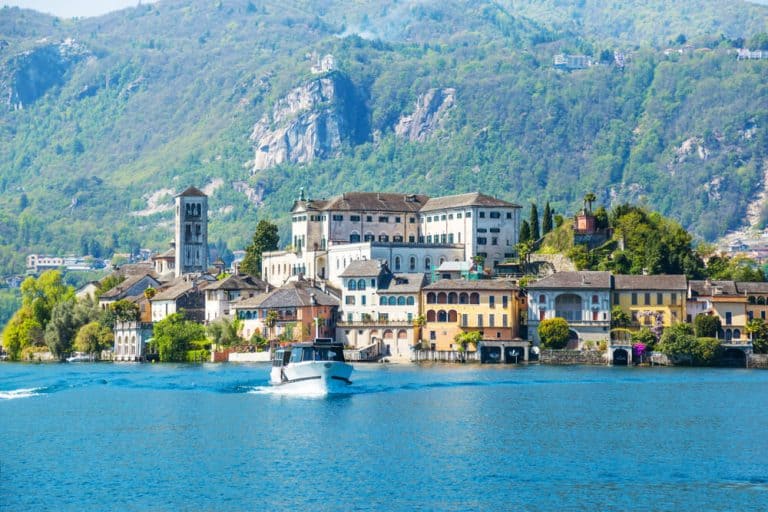
The principal town on Lake Orta, Orta San Giulio is a gem. It is certainly among the prettiest of any of the towns in the Italian Lakes. Charming lanes and alleyways weave their way past Renaissance and Baroque art and architecture. Squares and streets are lined with delightful boutiques, cafes and stores. All seem to reach the main square – Piazza Motta – eventually.
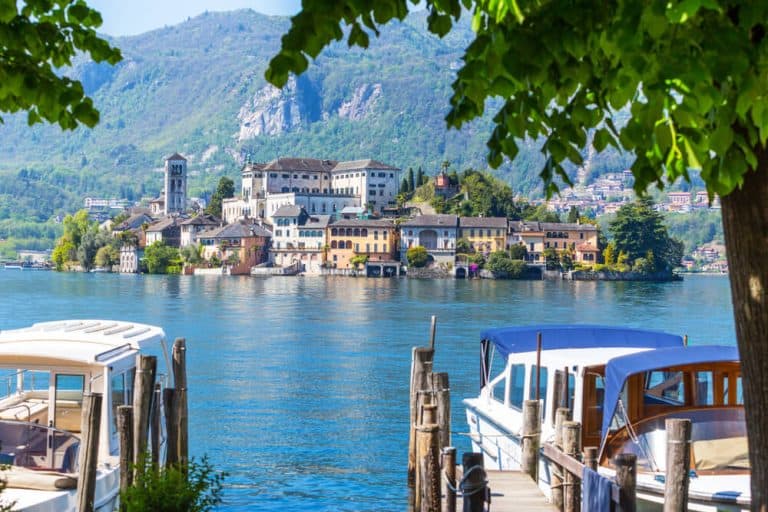
From here, a short boat ride costing just 5 euros and taking less than 5 minutes will whisk you across to Isola san Giulio that sits just 400 metres from the shore. Whilst Orta San Giulio may be bustling with holidaymakers, a visit to the island will restore the peace and calm you may be pining for. The island is dominated by its twelth century Romanesque basilica, home to the crypt of Saint Giulio. A single path then takes you around Isola San Giulio. Known as the Way of Silence, signs posted at regular intervals share thoughts about the power of silence. It is amazing how quickly this overcomes any temptation to look at your phone. This is a very peaceful, tranquil and special place well worth experiencing.
Tips for navigating the city
Like Bellagio, Orta San Giulio is fully pedestrianised. However, there are plenty of well-signed car parks as you drive towards the town. You can then either choose to walk down to the historic centre from here – it will take less than 10 minutes – or you can catch the small tourist train that regularly runs between the two. If you have young children, they may well make that decision for you!
Orta San Giulio is actually a great town if you enjoy walking. As well as enjoying a stroll along the lakefront or in the centro storico, there are a number of walking routes to enjoy. These include walks that incorporate a visit to Sacro Monte di Orta, one of Italy’s UNESCO World Heritage sites. The site includes a series of 20 chapels, each depicting an event from the life of Saint Francis through art.
Accommodation and dining recommendations
We definitely recommend spending a night in or near Orta San Giulio so that you can enjoy the atmosphere of the town when the majority of holidaymakers have headed home. The 3 star Michelin restaurant at Villa Crespi offers an exceptional fine dining experience. But there are plenty of more relaxed (and cheaper) options. A couple of our favourites include Ristorante Filo Fieno and Osteria San Martino which is actually a short drive from Orta San Giulio in the charming village of Crabbia. The restaurant is super traditional but serves up delicious food night after night.
If staying overnight in Orta San Giulio, there are plenty of accommodation options on offer, suitable for all budgets. These include B&Bs and hotels in Orta San Giulio as well as Orta San Giulio apartments too.
Luxury holidays in Riva del Garda
Introduction to Riva del Garda
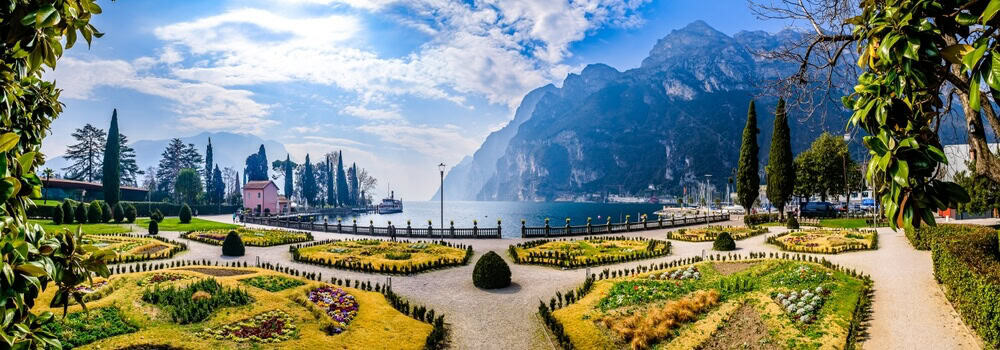
Riva del Garda sits at the northern tip of Lake Garda, at the foot of the Dolomite Mountains. With a relaxed, laid back vibe, it’s a popular spot for windsurfers and sailors as well as those keen on hiking, climbing and cycling. It is a picture postcard town, full of charming, winding passageways and a glamorous lakefront promenade.
The central piazza – Piazza III Novembre – is the real heart of the town. Riva del Garda has a long and rich history, much of which is still evident today in the town’s buildings and in its museums. The original Medieval walls still enclose the old town and the 12th century fortress (rocca) also still remains standing. These days the rocca is home to the Alto Garda Museum. Here you can find exhibits of everything from palaeolithic archaeology to 19th century landscape paintings.
Close by is the 14th century Praetorian Palace and the slightly older Apponale Tower. An angel sits on top of the tower guarding the main square. Head 100 feet up to its terrace to enjoy breath-taking views of the lake.
Take a walk out of the town to enjoy more wonderful views from the Church of Santa Maria Maddalena and the Tower of San Giovanni which overlook the upper part of Lake Garda.
Luxury holidays in Malcesine
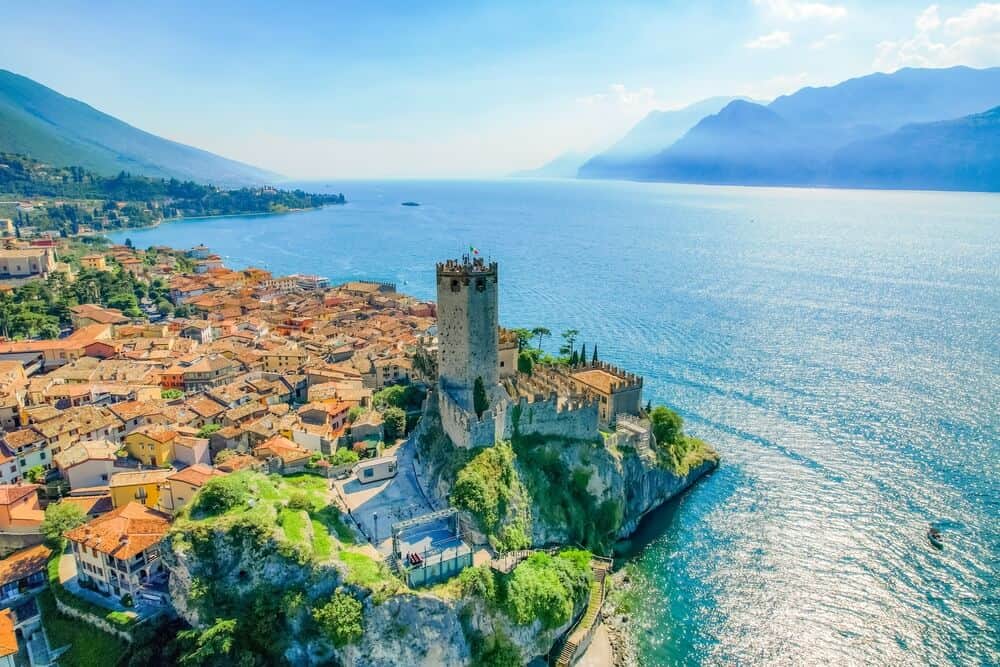
Introduction to Malcesine
Malcesine is a beautiful Medieval village nestled on the north eastern shores of Lake Garda and dominated by the Castello Scaligero. The castle is a subtle reminder of the incredible history of the region and the battles that would once have been fought to control this area. The charming cobbled streets below show no hint of the turmoil of the past though.
No visit would be complete without a trip up the cable car from the centre of the village up Monte Baldo. The first cable car takes you half way up the mountainside whilst a second, rotating cable car then takes you the rest of the way, allowing everyone to enjoy the views equally. Once at the top you can enjoy hiking in the summer and skiing in the winter. Sports enthusiasts can also enjoy some fantastic descents from the mountain top by bike. Or for those who prefer the lake, it’s one of the main spots for both sailing and windsurfing on Lake Garda too.
Ready to find your dream luxury holiday villa in the Italian Lakes?
Whether you picture yourself strolling along the lakefront in Bellagio, taking a boat across to the Borromean Islands from Stresa, or relaxing beside your private pool with views over Lake Garda, your ideal Italian Lakes retreat is just a click away.
With their dramatic mountain backdrops, elegant lakeside towns and some of Italy’s most beautiful gardens, the Italian Lakes are a truly special place to spend a holiday. We handpick every property to ensure your stay is exceptional. Explore our curated selection of luxury villas in the Italian Lakes today and take the first step toward your ultimate escape, then take a look at our guide to the best things to do in the Italian Lakes to start planning your days.
Have questions or need personalised recommendations? Contact our team, we are always happy to help!