




Italian Lakes
Travel Guide
Everything you need to know
Where are the Italian Lakes
The Italian Lakes region is in the north of Italy (although it is important to note that the lakes are also partly located in southern Switzerland). They sit south of the Alps in the basin of the River Po. There are a number of lakes. The most popular are Lake Garda, Lake Como and Lake Maggiore. However, Lake Iseo, Lake Lugano, Lake Orta, Lake Varese, Lake Monate and Lake Idro are also lesser-known lakes that can make an interesting holiday destination.
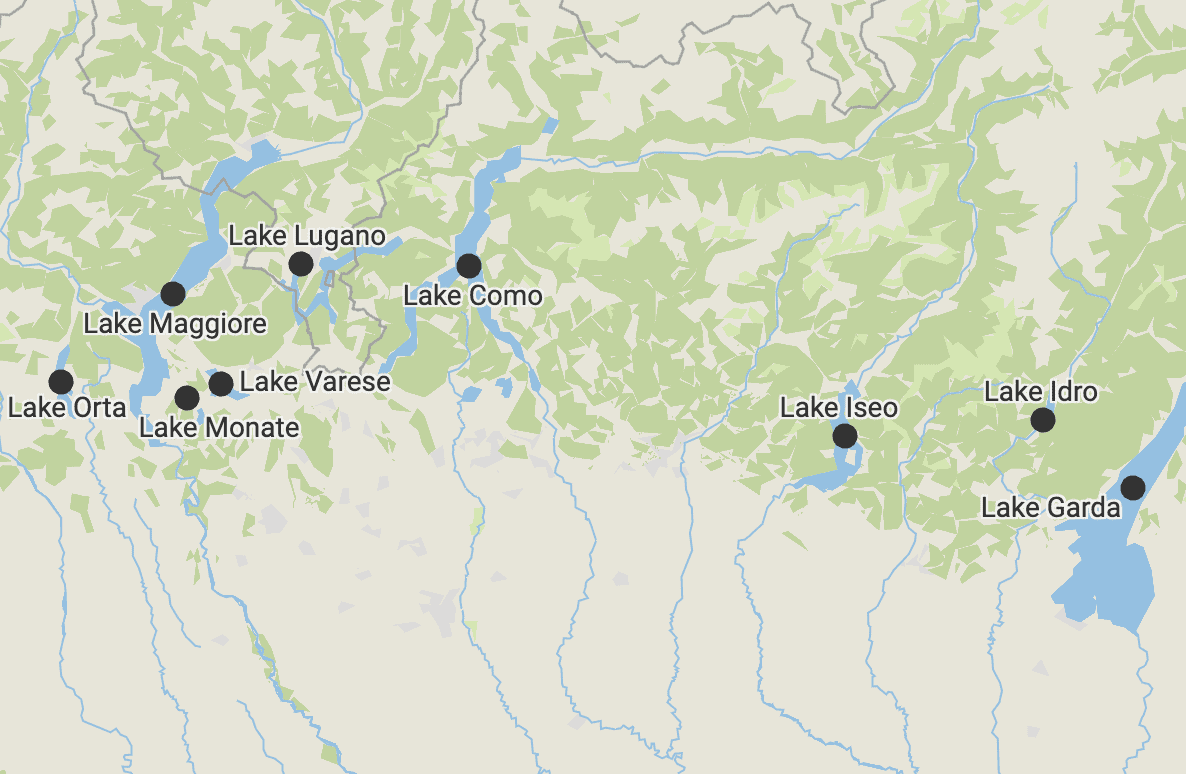
The lakes cover a large area and are not restricted to just one region of Italy. In fact, their shores span a number of different regions including Lombardy, Piemonte, Trentino-Alto Adige and Veneto.
Lake Maggiore is the longest of the Italian Lakes measuring approximately 65 km. It straddles both Switzerland and Italy. In fact, 15% of it is in Swiss territory. In contrast, more than 60% of Lake Lugano falls into Switzerland. Lake Como can lay claim to being the deepest of the lakes. The lake has two arms, one leading to Como and the other to Lecco. Lake Garda is the biggest lake. Unlike Lake Como and Lake Maggiore, it has no significant islands to speak of, although it does have a handful of small islets. Lake Orta is tiny in comparison, measuring just 13.5 km long and 2.5 km wide at its widest point.
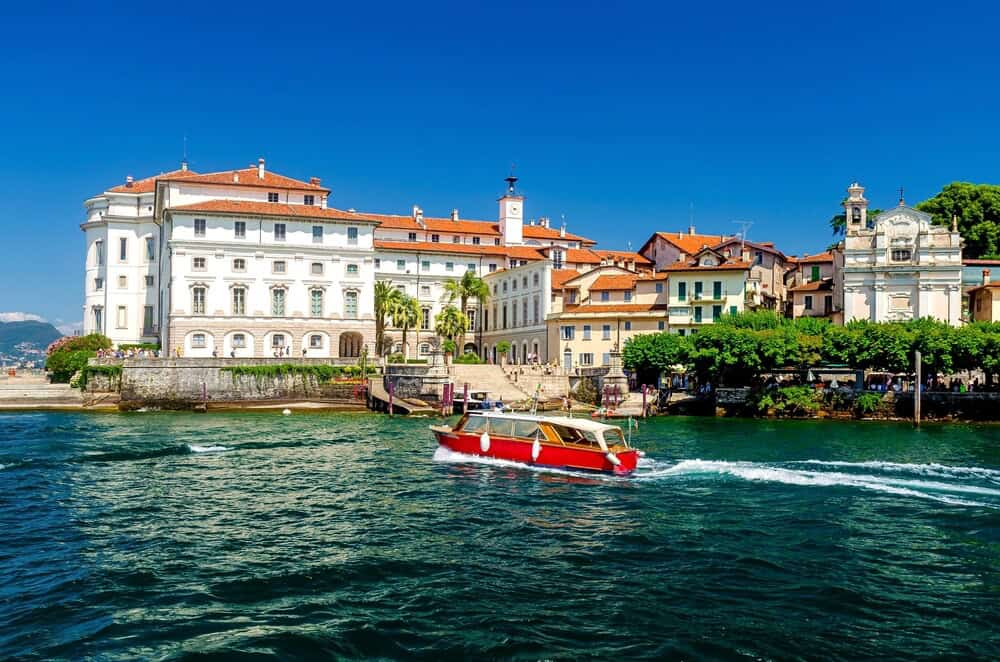
Because of the sheer size of the area, the Italian Lakes is a very diverse landscape. Each lake has its own unique characteristics. For example, Lake Como is famous for its steep forested slopes which rise up dramatically from the lake waters, nestled next to which sit beautiful villas and gardens. The largest of the Italian Lakes, Lake Garda has everything from water sports to Medieval castles to discover. Lake Maggiore has charming lakeside villages to discover and is home to the Borromean Islands. Lake Iseo is much more of a hidden gem in Italy. It is home to Monte Isola which is Europe’s largest lake island. And Lake Orta is a peaceful and tranquil gem.
How to get to the Italian Lakes
Because the Italian Lakes are located across such a wide area, there are a number of ways to get there. Whether you want to come by plane, train, car or bus, we have got you covered!
Getting to the Italian Lakes by plane
If visiting Lake Garda, then you have a couple of options. You could opt to fly into Venice Marco Polo Airport. This sits approximately 150 km to the east of Lake Garda. However, if flights allow, the nearest airport would actually be Verona Villafranca Airport (VRN). Sitting just south of the lake, this is just a 20 minute drive from Peschiera del Garda and 30 km from Sirmione, both key towns on Lake Garda. Ryanair, Easyjet and British Airways all fly here from the UK.
However, Verona airport would not be convenient for visiting all the other Italian Lakes. In this case, there are other, more convenient options to choose from.
Milan Bergamo Airport (BGY) might also be convenient if planning a Lake Garda villa holiday. After all, it’s just over an hour’s drive from the airport to Lake Garda’s western shores. However, Milan Bergamo is definitely most convenient for those visiting Lake Iseo. It is less than 50 km from Iseo itself or just 30 minute drive from the south east shores of the lake at Sarnico. Milan Bergamo is also a good option for those planning a Lake Como villa holiday as it is just 40 km from the airport to the southernmost tip of Lake Como at Lecco. If you don’t mind a longer transfer time, it’s even a good choice for those heading to Lake Maggiore too. It can take less than 90 minutes to reach the popular Lake Maggiore lakeside town of Arona from Milan Bergamo airport and it’s only 100 km from Lake Varese too.
However, if visiting Lake Maggiore, Lake Varese or even Lake Orta, Milan Malpensa airport (MXP) would be the closest option to choose. You can get to Lake Maggiore from Milan Malpensa airport in as little as 30 minutes. If you’re dependent on public transport, you can use the Alibus bus shuttle service from the airport to connect you to the western side of Lake Maggiore. Please note that this route is seasonal, running from April to October, and tickets must be pre-booked. At under half an hour, the journey time to Lake Varese from Milan Malpensa is even less, whilst to Lake Orta it’s still under an hour. Milan Malpensa is also convenient for those headed to Lake Como too. The main town of Como is less than 50 km from the airport.
Closer to Milan itself is Milan Linate airport. Like Venice Marco Polo airport in the east, this can offer a wider choice of flights for international travellers. It’s approximately an hour by car from Milan Linate to Lake Como, Lake Iseo, Lake Maggiore and Lake Varese, whilst Lake Orta is still less than 90 minutes away.
Lake Iseo is also served by another small airport – Verona Brescia (VBS). Ryanair fly into this airport from the UK. With a transfer time of just 40 minutes from here to Iseo, it is super convenient.
Finally, another couple of airports people often forget to consider are Turin and Bologna (BLQ). Whilst over 150 km south of the Italian Lakes, the journey time by car from Bologna to Lake Garda is still comfortably less than 2 hours. And Turin is just 130 km from Lake Maggiore.
All these airport options mean holidaymakers have plenty of choice. Milan is also a major global hub for not just tourism but also business and trade. This means that there is a high frequency of flights in and out of its airports too. And all this choice and competition between airlines on these routes means that flight prices can often be much more reasonable than to other cities in Italy.
Getting to the Italian Lakes by train
Italy is one of the most rail-friendly countries anywhere in the world. Some of Europe’s most impressive and scenic train journeys cross over its borders from countries in the north. For example, the route through the Brenner Pass links Munich with Venice. There are also fast train services between Paris and Milan. Once arriving in either Venice or Milan by train, it’s then easy to go on to reach the Italian Lakes.
If heading to Lake Como, you can catch a direct train from Milan Centrale to Como San Giovanni, getting you to the lake shores in under 50 minutes. This is Como’s main train station and it also has direct connections to some major Swiss cities such as Lugano or Zurich. A journey from Como to Zurich will take just 2.5 hours and there are approximately 10 direct trains a day on this route.
Similarly, you can easily catch a train from Milan Centrale to Stresa, the main town on Lake Maggiore. The journey will take just over 50 minutes. From here, the public boat network can take you to the other towns and villages on the lake. There are also slower, regional trains which will take longer but which offer a cheaper alternative. Trains also run from Milan to other towns on Lake Maggiore including Arona, Verbania, Calde, Luino and Locarno.
For those looking to travel to Lake Orta by train, this lake has a handful of train stations around its shores – Omegna, Pettenasco, Orta Miasino and Gozzano. However, there are no direct trains from Milan to Lake Orta. Instead, you will need to change trains at Novara. It is important to note that at Orta San Giulio, the station (Orta Miasino) is almost a 30 minute walk to the historic centre of the town and lakeside. Much of this route follows a lakeside path so it is an enjoyable walk but not perhaps quite so much fun if you have a lot of luggage!
Finally, to get from Milan to Lake Iseo, first take a train from Milan to Brescia and from here change to a regional train to Iseo itself. You can then once again use the ferries to reach the other towns on the lake. Alternatively, the Brescia-Iseo-Edolo train line operated by Trenord, also stops at the following towns on the eastern shores of Lake Iseo – Sulzano, Sale Marasino, Marone and Pisogne. The regional trains that go along this line also pass through a few additional stops such as Pilzone, Vello and Tolline. However, you won’t find any trains running along the western shores of the lake.
It’s easy to get to Lake Garda from Milan and the journey is extremely picturesque. The main train stations on Lake Garda are those at Peschiera del Garda and at Desenzano del Garda-Sirmione. Both are at the southern end of the lake. Fast trains take between 50 minutes and an hour and run up to 25 times per day. If you’re wanting to reach the northern part of Lake Garda, then you will need to buy a ticket to Rovereto. From here, it’s a bus ride to the lakeside. Riva del Garda is 45 minutes by bus and Torbole 35 minutes. There are no other train stations on Lake Garda so, once there, use the boat or bus network if using public transport.
There are two main train operators in Italy. These are the state run Trenitalia and privately owned Italo. Both provide super-efficient high-speed rail links between major Italian cities. In the Italian Lakes, you will also come across a couple of other operators. SBB is Swiss Federal Railways. They operate long distance trains between Switzerland and Italy, including routes to Milan. The S30 route connects Milan airport with Bellinzona via Laveno and Luino on Lake Maggiore. And there is also Trenord.
Trenord focuses on regional and local services, and is particularly strong in the Italian Lakes region. For those landing at Milan Malpensa airport, Trenord runs the Malpensa Express. This is a service that runs from Milan Malpensa airport terminals 1 and 2 to both Milano Cadorna and Milano Centrale Stations. Trains depart every 30 minutes. Trenord’s trains reach speeds of between 130 and 160 km per hour. Their trains usually have two different classes – first and second. First class will give you a more spacious seat and additional amenities that second doesn’t offer.
Getting to the Italian Lakes by car
If you are coming to the Italian Lakes from outside Italy, then there are three main points of entry into Italy by car. These are the Mont Blanc tunnel from France, the Grand Saint Bernard tunnel from Switzerland and the Brenner Pass from Austria. However, you also enter Italy from Switzerland via the Simplon Pass. This historic road sits further east in the Alps but will take you all the way from Switzerland to Stresa on Lake Maggiore.
Wherever you choose to cross the border into Italy, there is a good road network in Italy. To get from A to B quickly, then use the Italian Autostrada where possible. These are fast roads which you pay to use. Toll booths will either require immediate payment or ask you to take a ticket. In this case, payment will be made when you exit the motorway. Payment can be made by credit card or in cash. Just make sure you choose the correct lane – telepass or biglietto. The telepass will automatically deduct the toll from your bank account. But the likelihood is that you won’t have one of these devices fitted. Instead, opt for taking a ticket (biglietto).
Fun fact: Italy was the first country in the world to build motorways. And the first ever motorway to be built was the Autostrada dei Laghi back in 1924. This connects Milan to both Lake Maggiore and Lake Como. It now forms the A8 and A9 motorways. You can also take the A26 motorway from Milan to Sesto Calende to access the eastern shore of the lake. The main east west link road from Lake Garda in the east to Lake Maggiore in the west is the E64. There is also a fast road – the A22 – that runs east of Lake Garda from north to south. You can check real time traffic information and journey times using the network of Italian autostrade here.
Once near the lakes, roads can often be narrow and winding. This can mean that driving around the lake can be slow-going. In some areas, roads can also be steep.
Getting to the Italian Lakes by bus
It’s not often we recommend using the bus over the train, but if you are landing at Milan Malpensa airport and need to get to Lake Maggiore using public transport, than the Alibus is also a great option. The bus must be pre-booked and is seasonal, usually operating between April and October each year. It collects from both terminals at Milan Malpensa airport and stops at a number of lakeside villages including Stresa, Arona, Lesa, Belgirate and Pallanza.
Likewise, if you land at Milan Malpensa and want to get to Lake Como, then Flixbus offer a regular service between the airport and the lakeside. Flixbus have a number of routes throughout Italy, including a route from Venice airport to Peschiera del Garda so it’s worth looking at their site for options.
How to get around the Italian Lakes
We think that the best way to get around the Italian Lakes is to use a combination of transport options. A car isn’t always essential but we do usually recommend having one, even if it’s parked up for large parts of your Italian Lakes villa stay. But you can also use a combination of boats, buses and trains too. Trains tend to connect major towns whilst the ferries are typically great for reaching the smaller towns and villages.
Using public transport on your luxury holiday to the Italian Lakes
The easiest and most popular way to explore each of the Italian Lakes is by boat. All the large lakes – Garda, Como and Maggiore – have an excellent public ferry service that criss-crosses the lake all day long. Timetables can be viewed at Navigazione Laghi.
There are three types of boat. The first – battello – is a great option for tourists. It is the slowest option. But these boats have an outside deck and provide the opportunity to simply savour the wonderful lake views you can enjoy en route. The second is the hydrofoil (aliscafo). This is a much faster service. And finally, there are traghetti (car ferries). These allow you to travel with your vehicle across the lake. On Lake Maggiore, this runs throughout the year from Intra to Laveno and on Lake Garda from Maderno to Torri del Benaco. In the Summer time, there is also a car ferry on Lake Garda between Limone and Malcesine. On Lake Como the car ferry runs between Bellagio, Menaggio, Varenna and Cadenabbia.
Lake Orta also has a daily public boat service which stops at Orta San Giulio, Isola San Giulio as well as the charming villages of Pella, San Filiberto, Lagna and Omegna. On Thursday, it’s market day at Omegna and on this day, there are additional services from many of other lakeside villages. These include L’Approdo, Pettenasco, Giardinetto, Crabbia, Ronco and Oira. The Lake Orta boat timetable can be viewed here.
You won’t find a boat service on smaller lakes such as Lake Varese or Lake Monate. It is also important to note that the frequency of boats will vary significantly in low season versus peak season.
Trains serve some areas in the Italian Lakes but certainly not all. For example, whilst it is easy to get to Como by train, if travelling onwards up the lake from there, then there are no other train stations on the western branch of Lake Como. Travelling by train along the eastern branch of Lake Como is easier. A train route goes from Milan through Lecco, Varenna and Colico. As a result, if you’re needing to get up the lake to towns such as Bellagio or Menaggio, you can catch a train from Como to Varenna-Esino and then catch the boat from here to your final destination. Alternatively, when arriving in Como by train, you have the option of using the public boat network from Como to get you from A to B.
On Lake Maggiore, both sides of the lake are covered by railway lines. That on the eastern Lombardy side is the Milan-Luino line. On the west Piedmont side, it’s the Milan-Domodossola line.
On Lake Garda, the two main train stations in the south of the lake are Desenzano and Peschiera del Garda. In the north, it’s Rovereto. However, most of the smaller towns and villages either don’t have train services at all, or are potentially better served by buses.
Travelling by bus is also often a cheap mode of travel if you’re on a budget. Just be aware that they are not always particularly frequent and the timetable will vary from Winter to Summer. What is more, it can be confusing working out what buses are running and when. This is in part because there is no national bus network in Italy. Most buses are regional. And, even within the same region, there can sometimes be multiple companies operating.
The main bus companies in the Italian Lakes are V.C.O. Transporti Srl and S.A.F. Srl. To take Lake Maggiore as an example, V.C.O. has five main routes here. Route one operates between Omegna and Verbania, line 2 is an urban line in Verbania and line 3 runs from Verbania to Brissago in Switzerland via Cannobio. You then also have line 4 between Verbania and Piancavallo and line 5 from Verbania to Mergozzo and Domodossola. S.A.F. has suburban services on a couple of key routes. The first goes from Verbania to Milan via Baveno, Stresa and Arona. The second is the Valgrande line stopping at Verbania, Aurano, Caprezzo, Cossogno and Intragna and Miazzina.
If opting for the bus on Lake Garda, line 27 (LN027) runs along the entre western coast, linking Desenzano to Riva del Garda. The same is true on Lake Como, where it will be the C30 (Como to Bellagio via Nesso) and C10 (Como to Colico passing through Tremezzina and Menaggio) routes that will be most helpful.
Information about buses online is generally limited and not particularly user friendly. You may also find that services are much fewer at the weekend than on weekdays. And they may well not operate at all on public holidays. If you’re already in Italy, you may want to visit the bus station in person to check timetables and book tickets. Or you can book tickets online via Omio.
Alternatively, bus tickets in Italy can now be purchased online at Trainline. Bus tickets in Italy typically go on sale about three months before the date of travel. Booking early will ensure you take advantage of the cheapest fares.
Renting a car for your luxury holiday to the Italian Lakes
There are a number of benefits to driving a car in the Italian Lakes. Not least, it allows you to explore this region at your own pace. It also enables you to fully discover the smaller picturesque lakeside towns and villages and get into the hills and mountains round about. We do recommend if renting a car that you do so at the airport. Apart from in the larger lakeside towns, it’s not easy to find a local car rental office and rental prices are usually at a premium when hiring lakeside versus at the airport.
There are two types of main roads in the Italian Lakes – the motorway (autostrada) and the state roads (superstrada). The autostrada are toll roads indicated by green signs. The superstrada are indicated by blue signs and are free to travel on. The A8 and A9 are known as the highways of the lakes, since they provide access to the large lakes of Northern Italy including Lake Como and Lake Maggiore. The A8 links Milan with Varese and the A9 Milan with Como.
Many of the smaller streets around the Italian Lakes are narrow and don’t provide much room for cars to pass. As a result, don’t hire a vehicle bigger than you need. And, if parking on the roadside, we recommend you put your wing mirrors in to minimise the chances of damage to your vehicle. Be prepared for twists and turns and even hairpin bends, particularly on the hillsides around the lakes. And expect plenty of tunnels! Italian law requires all vehicles to keep their dipped headlights on even during daylight hours when driving outside urban areas, including on motorways. When in the Italian Lakes, we advise you keep them on dipped all the time, just in case you come across a tunnel or two!
Drivers should also be aware of Zona Traffico Limitato (ZTL). These restricted traffic areas prohibit non-resident vehicles from entering. The aim behind them is to reduce pollution and limit damage to streets and buildings in the historic centres. In reality, whilst they may cause stress to some drivers, they have also managed to create a much nicer experience for those exploring these historic centres on foot. The ZTL tend to be active during certain hours so you need to read the signage carefully.
Every entrance to a ZTL will be clearly signed indicating that you are entering a restricted traffic area. These signs consist of a white circle with a red border on a white background. The words ‘Zona a Traffico Limitato’ is clearly written above the circle, whilst below there will be information regarding the timing that the restrictions are in place. For example, a sign stating 9.00 – 18.00 would indicate that the restrictions are in place between 9 o’clock in the morning and 6 in the evening. Your rental car will not have a permit to access these areas. Nor will your own vehicle. The only exception will be if you have booked accommodation within a ZTL and your accommodation provider has already informed you that you are able to enter the area and have already taken a note of your car registration plate. If in doubt, check with them before entering.
Don’t be tempted to enter if you happen to see other vehicles inside the area. Residents are normally allowed to enter as is public transport. And don’t be fooled by what your GPS or SatNav system might be telling you to do either. Sadly, they’re not always that smart and don’t always inform you that you’re entering a restricted traffic zone!
Bellagio on Lake Como, Stresa and Cannobio on Lake Maggiore, Bardolino and Lazise on Lake Garda and Orta San Giulio on Lake Orta all have ZTLs in place. As do other lakeside towns. Entrances will also be marked by security cameras. These will immediately record your registration number if you enter and a fine will be issued should you be breaking the restrictions.
However, most towns have clear parking areas outside these ZTL areas. We find that parking is relatively straightforward (albeit you may sometimes need to be a little patient to wait for a space to come up). For us, the exception is when it’s market day in a town. It can then be super difficult to find somewhere to park up. Instead, on these days, we recommend you opt to arrive by boat or public transport if you can.
Wherever you choose to park, don’t leave any valuables on display. Whilst Italy is a safe country, you should avoid leaving items on display that might tempt someone to break in. Even when at the service station, make sure your car is locked when heading inside to pay. And, if you can possibly avoid it, don’t even leave valuables locked in the boot.
Getting around the Italian Lakes by taxi
There are private taxi companies which offer connections from the airport to your Italian Lakes accommodation. There are also services such as FreeNow and Uber on some of the lakes, but not all. On Lake Como, there are a couple of main taxi companies – Radio Taxi Como being one. Similarly, on Lake Maggiore there are a few taxi companies you can find online via their website – Taxi Stresa Matteo for example. The same is the case with Lake Garda. However, generally, once at the lake, don’t expect to be able to get a taxi easily. Book ahead.
It is also possible to hire a private taxi boat to explore the lake. On Lake Maggiore, there is Lago Maggiore Boat which offer a water taxi service as well as tours. Similarly there is Lake Como Water Taxi on neighbouring Lake Como (amongst others) and Danieli Taxi Service on Lake Garda. Certainly, a water taxi is a very elegant and glamorous way to get from A to B. In peak season it can also mean you can avoid any congestion on the lakeside roads (particularly on Lake Como which can get really snarled up). Just make sure you check the price beforehand.
The best time to visit the Italian Lakes for a luxury holiday
There is no bad time to visit the Italian Lakes! Instead, think about the best time to visit based on your interests.
However, our favourite time of year is certainly the Summer, perhaps not least because our visits then have created so many happy family memories.
Summers in the Italian Lakes tend to be dry and hot. However, the lakes create their own micro climate – they warm the area in the Winter months and take the edge off the heat in the height of the Summer. This means the region tends to escape the stifling humidity you can see further south in Italy. Certainly, Summer can be a great time to visit if you want to combine lazy days sunbathing at the lakeside lidos with exploring the lakeside towns and villages. However, don’t expect completely dry weather. It can rain, although in the Summer months the rainfall tends to be at night – the thunderstorms then can be pretty dramatic and make for some great weather watching.
That said, some of the lakes, particularly Lake Como and Lake Garda, can get extremely busy in the peak Summer months. Expect to find driving slow along Como’s narrow lakeside roads and be prepared to book activities well in advance to ensure you don’t miss out.
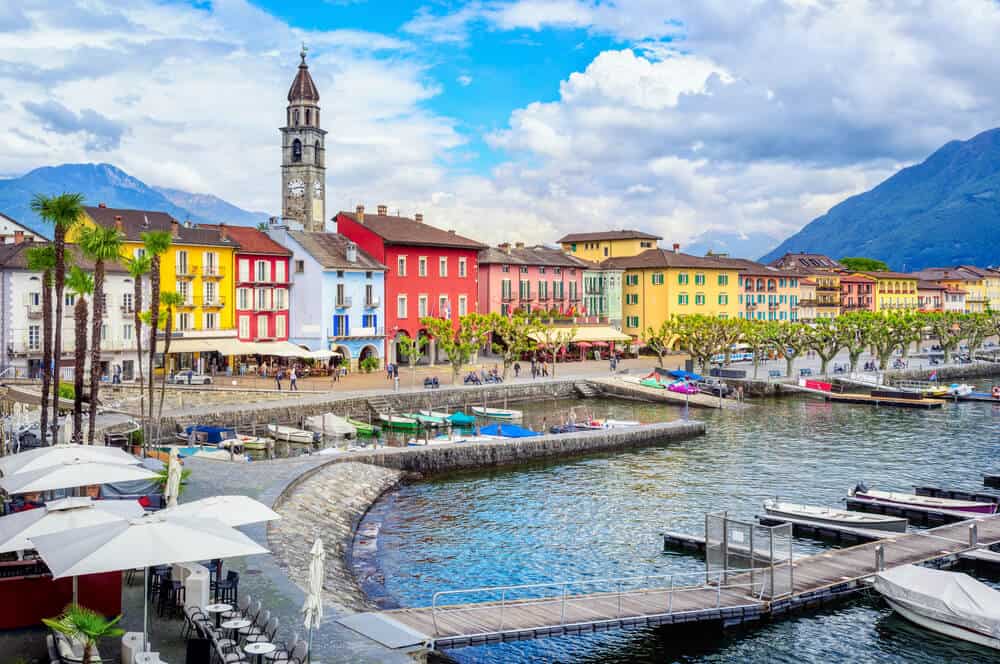
As a result, those preferring to avoid the crowds might want to consider visiting in the late Spring or early Autumn instead. Late Spring is certainly when you can expect the lakes to be at their most colourful. The wisteria and camelia will be in full floom in April and May. However, if you plan to be swimming in the lake, expect to find lake waters on the distinctly chilly side. We’ve been known to take a dip in early April but it’s not a time for the feint hearted to take the plunge!
Lake temperatures average 10 degrees centigrade in April, warming up nicely to 24 in July and August. And in September temperatures remain a very pleasant 20 or more degrees.
Don’t rule out visiting the Italian Lakes in the off -season Winter months. There is something particularly charming about this region when all the tourists have gone home. However, we advise you choose your destination carefully if doing so. Many businesses in some of the most popular lakeside towns such as Bellagio will close in the Winter months. Choose an authentic town which has a strong local population.
Visitors should also be aware that the public boat system is. As a result, you should be prepared to find yourself driving between sites a lot more during the Winter months.
How many days do you need in the Italian Lakes for a luxury holiday?
At Italy Villa Holidays, we’re super happy to create a bespoke itinerary for your Italian Lakes villa holiday. An itinerary will inevitably vary dependent on the location of your Italian Lakes villa in and whether this is your first visit or whether you’re returning seasoned holidaymakers. We’re always in favour of ‘slow travel’. By that we mean not rushing around trying to tick everything off on one trip. It’s about embracing a more sedate, leisurely pace. It’s a way of exploring an area at a deeper level, prioritising quality experiences over quantity. It’s also about connecting with locals so that you leave with a deeper understanding of their culture, instead of just focusing on the main tourist hotspots.
3 Days in the Italian Lakes
If you have just 3 days in the Italian Lakes, we recommend you choose just one lake and focus your attentions there rather than moving between lakes. In many respects, it doesn’t matter too much where you choose to base yourself on your chosen lake as it’s so easy to explore.
5 Days in the Italian Lakes
If spending 5 days in the Italian Lakes, there are numerous itineraries you could choose from, but let’s just say you chose Lake Maggiore as your base. You could spend day 1 visiting the beautiful Borromeo Islands. Trying to visit all 3 of these islands in a day is going to be difficult but not impossible, especially if you opt for a private driver so you’re not dependent on the public boat timetable. Day 2 could be spent exploring one of the lakeside towns before heading to the beautiful Santa Caterina del Sasso in the afternoon. Day 3 could be spent exploring another of the lakeside towns before heading to one of the lakeside beaches or lidos in the afternoon for some rest and relaxation. Day 4 might then be an opportunity to enjoy some water sports or a chance to use the boat system to discover more of the charming lakeside towns and villages. Our ‘must see’ towns on Lake Maggiore include Arona, Ascona, Cannero, Canobbio, Luino, Pallanza and Stresa so you can easily see how, even in 5 days, you’re not going to be able to tick everything off your list. And day 5 could be a chance to enjoy a hike in the beautiful countryside and hillsides that surround the lake. Why not head up the bucket lifts in Laveno to reach the beautiful countryside at its summit and to enjoy the breath-taking views. Or explore the wonderful hikes in the hills behind Cannobio.
Alternatively, you could opt to spend days 1, 2 and 3 exploring your first choice of lake and then you can consider moving across to explore another lake for your last couple of days.
If choosing Lake Maggiore for your primary destination, then it can take as little as 15 minutes to drive from here to Lake Orta, or as little as 50 minutes to reach Lake Como on the other side so certainly a 5 day twin centre stay is easily possible. Lake Garda is a longer drive. However, if you opted for Lake Garda for your first 3 days, then you can still reach Lake Como and Lake Maggiore by car in under 2 hours.
That said, the proximity of the lakes to one another is just as much an argument for sticking with a single base and enjoying day trips to the other lakes if you want to explore further afield.
In this case, if you have just a single day on a lake and only have the opportunity to do one thing, these would be our priorities. On Lake Maggiore, for us it would be to visit the Borromean Islands. On Lake Como it would be a trip to Bellagio and Varenna. On Lake Garda it would be to wander around the lakeside towns of Sirmione, Riva del Garda or Malcesine, and on Lake Orta it would a trip to Orta San Giulio and its nearby island.
10 Days in the Italian Lakes
If you are lucky enough to have 10 days in the Italian Lakes, then you may actually still choose a single base and enjoy a slower pace of travel. However, if you are keen to explore more, then a 10 night stay allows you the option of a twin centre stay with 5 nights on Lake Garda and 5 nights on either Lake Como, Lake Maggiore or another of the lakes.
Our very first trip to the Italian Lakes region was back in 2003. Back then we opted for 5 nights on Lake Como before heading to neighbouring Lake Maggiore for 5 nights. This worked extremely well and meant we could get a good feel for both.
14 Days in the Italian Lakes
If you can spare the time, then a 2 week stay in the Italian Lakes allows you to see all the sights in a 10 night stay but again enjoy the Italian Lakes at a slower pace. Stop en route as you drive from A to B, allowing you the opportunity to discover some of the smaller towns and villages on the lakeside. And make sure you take time to just relax and enjoy your chosen Italian Lakes villa rental. Visit the local markets and enjoy some experiences. Spending time with the locals is the best way to bring the region to life.
A month in the Italian Lakes
In reality, given the sheer size of the Italian Lakes, you would need at least a month here to do it justice. A month allows you ample time to properly explore each of the main lakes – Lake Garda, Lake Como and Lake Maggiore – whilst even being able to discover some of the smaller, less well-known lakes too such as Lake Orta or Lake Monate. We recommend having no more than 2 or 3 bases at most and then doing day trips from these bases.
Luxury holidays in the Italian Lakes for...
An Italian Lakes villa holiday is one that is suited to all. There is so much to see and do in the Italian Lakes that we’re confident that whatever your tastes and interests, you will find plenty in the Italian Lakes to enjoy.
For Couples
If you’re looking for a romantic break for two in Italy, we highly recommend Lake Como or Lake Orta. If you’re after romance with the crowds, then Lake Orta ia one of the quietest and most tranquil of the Italian Lakes. Enjoy a day exploring the beautiful lakeside village of Orta San Giulio before taking the short 5 minute boat ride to Isola San Giulio that sits just off its shores. Silence prevails on the island and as you enjoy the short walk that takes you around its perimeter, signs remind you of the power of silence through inspirational quotes.
That said, if you’re looking for a bit of glamour to add to your romantic holiday, then Lake Como is a great option. George Clooney’s decision to buy a house on Lake Como added to the showbiz appeal that Como already had thanks to its use for scenes in James Bond’s Casino Royale. And there is surely nothing more romantic than a stroll through the magnificent gardens of Lake Como’s Belle Epoque villas. Although, it has to be said, a private boat ride to the Borromean Islands on Lake Maggiore would give Lake Como a run for its money in the romance stakes!
And you shouldn’t rule out Lake Garda either. Whilst much of Lake Garda is busier and more bustling, there are numerous charming lakeside towns and villages on its shores which could be the perfect base for a romantic getaway. Lake Garda is also the closest Italian lake to Verona, the home of the star-crossed lovers. Why not join the other couples who visit Romeo and Juliet’s balcony each year to leave a padlock attached to the gates or to leave a love letter in the cracks of the walls. It is a beautiful city to explore hand in hand with a loved one.
For Families
If visiting the Italian Lakes with children in tow, our definite recommendation is to visit Lake Maggiore. When we first visited the Italian Lakes prior to setting up Italy Villa Holidays, we spent a week on Lake Como and a week on Lake Maggiore. It was the latter that won over our hearts and which we felt was truly family friendly. Numerous family holidays and business trips later, our views haven’t changed.
Lake Como’s beauty is dramatic, with hillsides and mountains rising seemingly straight out of the water. However, this does have its drawbacks for family holidays. For one thing, Lake Como’s beaches tend to be less easily accessible. There are fewer of them, and many of those that do exist are private and owned by the grand villas that line the lake shores. Even when thinking about the things to do on Lake Como, there is much less geared to children and much more to adults.
In contrast, Lake Maggiore is super family friendly and there is an abundance of things to do for children and teens These include a vast array of water sports – pedaloes and paddleboards are perfect for all ages whilst water-skiing and windsurfing are on offer for children approaching the end of primary school and up. Not only that, there are a plethora of beaches and some great lidos that not only provide access to the lake but also have waterslides and inflatable assault courses! Go-karting, ziplines and tree-top adventure courses complete the line-up. We think that combining some child friendly excursions like these with activities that the grown-ups will enjoy is the recipe for a perfect Italian Lakes holiday!
Our second choice after Lake Maggiore for families would be Lake Garda. Whilst we aren’t such fans of the greater number of tourists in parts of Lake Garda, the lake is home to Gardaland which attracts thousands of families each year.
Solo Travellers
If travelling solo, we recommend choosing a lakeside location, that provides you with good public transport links and easy access to the boat network. Whilst driving in the Italian Lakes is easy most of the time, it can still be stressful if driving on your own. As a result, we think it’s much more relaxing to explore the area by boat (or using the other public transport links available).
Alternatively, if you’re looking to meet others during your travels, choosing one of the larger towns or cities in the Italian Lakes can be a great option. Como is a nice sized city. It’s not too big or daunting but big enough to easily connect with fellow travellers and experience the city’s culture as part of a larger group
For Groups
We think that renting a large villa in the Italian Lakes is a great option for groups. You’ll be able to enjoy the privacy and space that a self-catering villa offers. If part of a larger group, we recommend opting for one of the larger lakes – Lake Como, Lake Garda or Lake Maggiore.
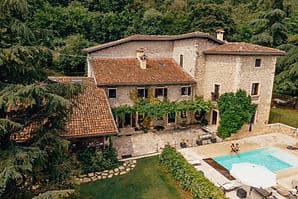


Ready to plan your luxury holiday to the Italian Lakes?
Ultimately, an unforgettable trip to the Italian Lakes starts with finding your ideal retreat, a place to unwind after a day exploring pretty lakeside towns, grand villas and glorious gardens. Whether you dream of waking up to views across Lake Como, sipping a glass of local wine on a terrace overlooking Lake Garda, or relaxing beside a private pool in the hills above Lake Maggiore, we have handpicked the region’s finest properties for your stay.
Explore our exclusive collection of luxury villas in the Italian Lakes to discover your perfect home away from home, and for more inspiration, read our guides on where to stay in the Italian Lakes and the best things to do in the Italian Lakes. If you’d like tailored recommendations or have any questions, feel free to get in touch with our team, we’re always happy to help!