




Where to stay on a luxury holiday in Puglia
Cities and towns in Puglia
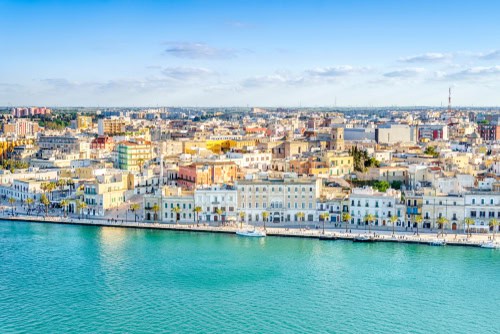
Puglia is filled with charming villages, towns and cities. Some of the most famous of these are Alberobello, Bari, Brindisi, Polignano a Mare, Ostuni, Martina Franca, Cisternino, Lecce, Locorotondo and Gallipoli.
Luxury holidays in Bari
Introduction to Bari
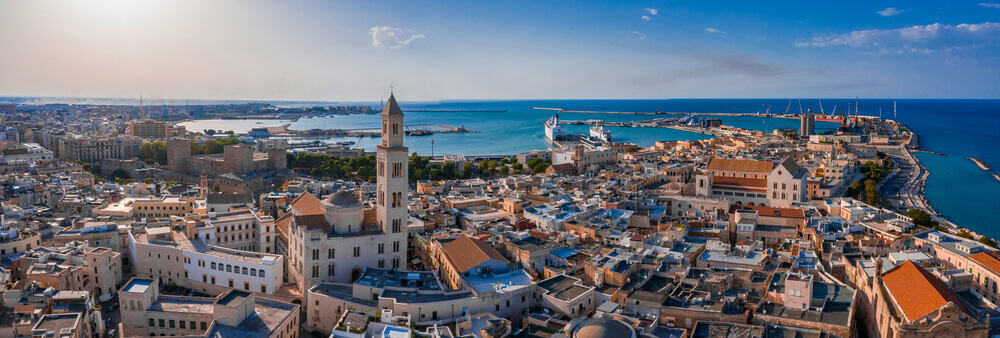
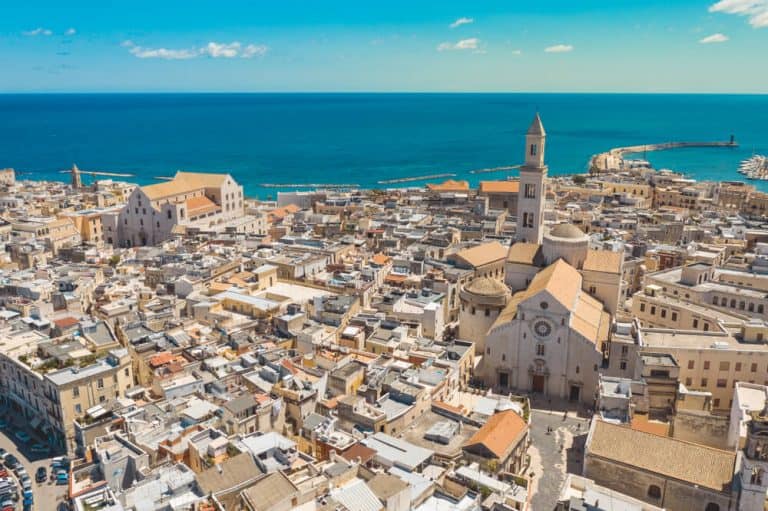
Bari is the capital of the Puglia region. Its sights can easily be seen in a day, but if you can spare the time, we recommend you stay overnight. Like many of Puglia’s towns and cities, life only starts mid afternoon so to really appreciate the atmosphere and life as a local, it’s best to spend a full 24 hours here.
Further south in Puglia, Lecce is often described as the Florence of the South. If this is the case, then we would probably compare Bari to Bologna. It is more urban than many of Puglia’s cities. And, with a strong student population thanks to its large university, it has a livelier nightlife.
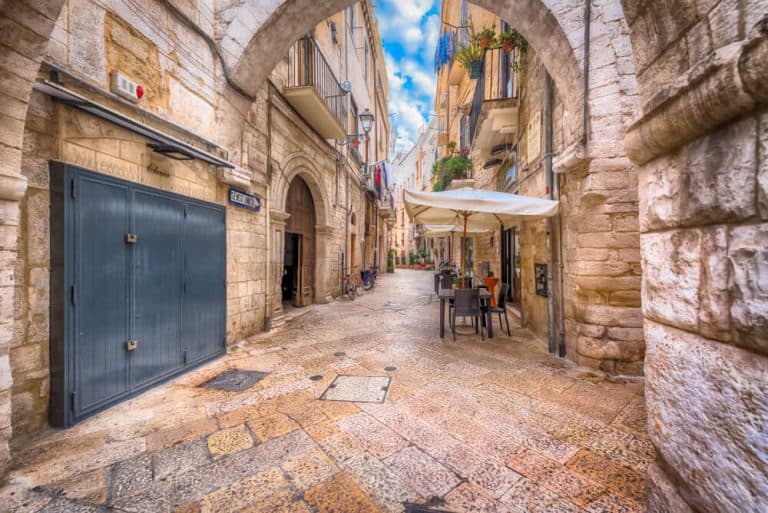
The town is split into two main areas – the older Bari Vecchia (which is oozing in history and charm), and the more modern Murat area closer to the train station. This is where you will find all the shopping as well as high end cafes, bars and restaurants.
Many of the must-see attractions in Bari are in the historic centre. These include the Basilica di San Nicola, home to the relics of Saint Nicholas, and a popular site for pilgrims. A short walk from here is Bari’s 12th century castle, close to which you will find the affectionately named Strada delle Orrecchiette. It is so-called as it is lined with ladies making and selling this ear-shaped pasta. The most famous of these Bari pasta grannies is Nunzia who even appeared in Vogue, but there are numerous others. Also in Bari’s historic centre is the Cathedral and its central square – the Piazza Mercantile. You can still see the Colonna della Giustizia here where back in the 16th century, debtors would have been tied and whipped as punishment.
Bari also has a number of museums worth visiting. For example, the Palazzo Simi is ideal for exploring Bari’s underground past, whilst the Museo Archeologico di Santa Scolastica looks at Bari’s history as far back as the Bronze Age.
Tips for navigating the city
Bari airport is just 9 km from Bari’s city centre. Either opt to catch the number 16 bus which will get you to the heart of Bari in 40 minutes or catch the train which will get you there in half the time. Incidentally, parking is extremely limited in Bari, and driving in the city can be stressful, so we recommend you avoid coming by car if you possibly can.
Despite being Italy’s third largest city behind Naples and Palermo, it is easy to explore Bari on foot. Certainly, within Bari Vecchia, everything is within easy walking distance. Its main sights – Bari Cathedral, Castello Svevo and the Basilica di San Nicola, are all connected by narrow, winding streets which can really only be navigated on foot. The seafront promenade is also best discovered on foot.
However, if you do need to rest those legs, Bari does have an efficient bus network run by AMTAB. Or there is also an excellent bike sharing service in Bari. Using the VaiMoo app, you can navigate your way along the main cycle paths in Bari. The first 30 minutes are free (or €0.50 for an electric bike). Just pick up and drop off at the nearest collection point.
Accommodation and dining recommendations
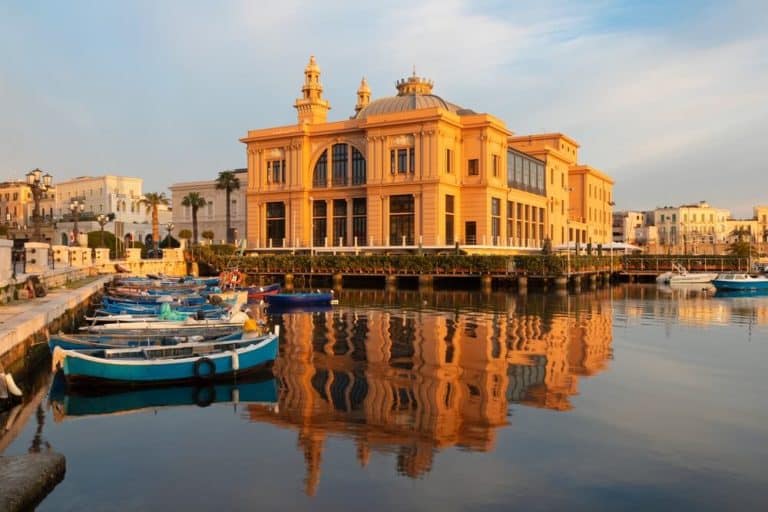
If staying overnight in Bari, there are plenty of accommodation options on offer, suitable for all budgets. These include hotels in Bari, B&Bs as well as Bari apartments too. Just be aware that, whatever option you choose, you will need to pay a tourist tax. In Bari, the tourist tax applies to all accommodation but the amount depends on the type and rating of your hotel or holiday rental. Typically costs are between €1.50 and €4 per person per night. The tax applies to all those aged 14 and over and it is applied for a maximum of four consecutive nights. Alternatively, given how easy it is to reach Bari by public transport, you could also opt to stay in a Puglia villa in the Bari countryside.
It’s certainly worth spending at least one night in Bari if you can during your Puglia villa holiday. That way, you can also make the most of the wonderful bars and restaurants in the city.
One of our favourite classic dishes to enjoy at lunchtime is the famous octopus sandwich. Sold from hatches and bars throughout the city, it is a delicacy not to be missed. The other street foods in Bari that you absolutely must try are the Focaccia Barese and the Panzerotto. This is probably most accurately described as something akin to a small calzone. Suffice to say, it’s delicious. The best place we have found to enjoy all three of these is Mastro Ciccio.
For the best orecchiette we’ve ever had in Italy, head to Orecchietteria San Nicola. Or for a contemporary, fine dining experierence opt for La Bul.
Luxury holidays in Alberobello
Introduction to Alberobello
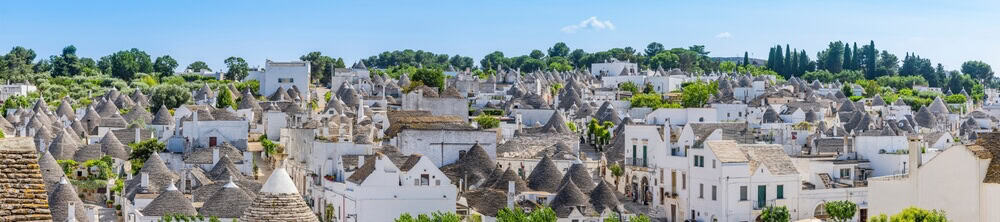
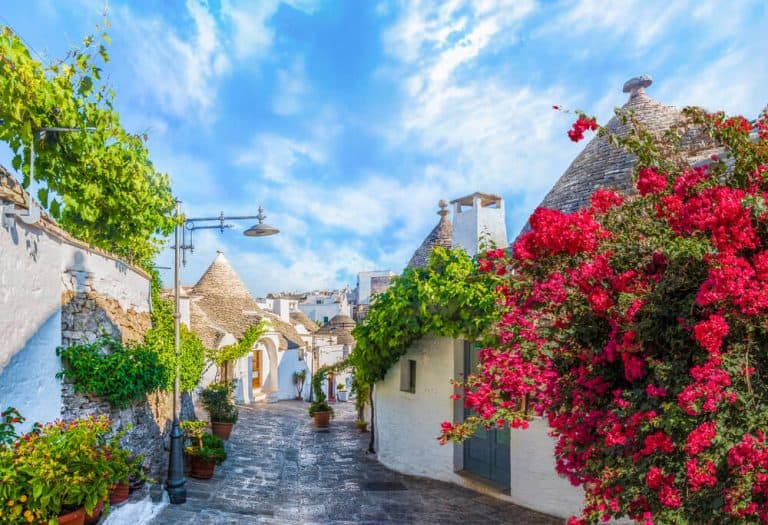
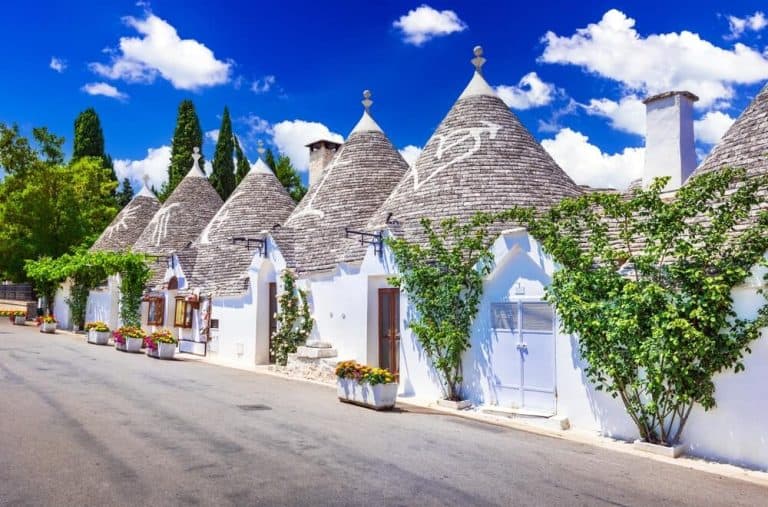
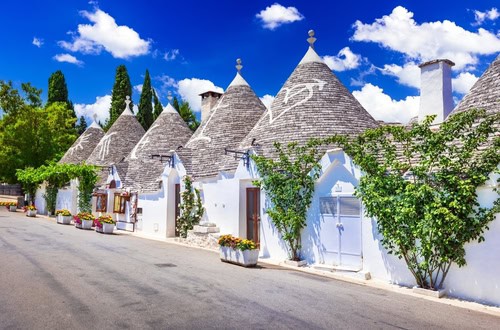
Alberobello is arguably Puglia’s most famous town. Home to over 1500 trulli, it’s one of a number of UNESCO World Heritage sites in Puglia. It is also one of Italy’s borghi piu belli (most beautiful towns in Italy). Trulli are buildings of dry-stone construction, made from limestone that date as far back as the 14th century. They typically have thick whitewashed rectangular bases with conical shaped roofs, small windows and a doorway. If you want to find out more about the trulli in Puglia, visit the Trullo Sovrano. This is the largest trullo in Alberobello. Arranged over two stories, it’s now a museum. The Museo del Territorio will also give visitors the opportunity to find out more about the history of these buildings and specifically to understand how people would once have lived in them.
Alberobello is split into two parts – Rione Monti (where there are 1030 trulli) and Rione Aia Piccola with 590 trulli. We recommend you start your visit to Alberobello in the Rione Monti. Enjoy a stroll through the main street here and enjoy time in the boutiques and shops that line it.
We also recommend you visit the Church of Sant’ Antonio. This is the only trullo church in the world. We also recommend you visit one of Alberobello’s other churches – the Chiesa di Santa Lucia – even if you only visit to admire the view of the trulli from the viewing platform here. Visit in the morning if you can so you can get some great pictures before the sun goes over the trulli, or at sunset.
Another great view of the trulli in Alberobello is at the Villa Comunale Belvedere park. Or, if you fancy enjoying an aperitivo with a view, head to the Bar Riona Monti. Incidentally, if you see a sign outside any of the trulli saying casolare panoramica, you will be able to enjoy the view from their rooftop terrace in return for purchasing an item from their store.
Find out more in our Alberobello travel guide.
Tips for navigating the city
Alberobello is super easy city to discover on foot, especially as the historic centre is a Limited Traffic Zone (ZTL). The trulli are within an area of approximately 27 acres. And two or three hours will be more than sufficient to discover the town. However, if you can, we do recommend staying longer.
If arriving by car, there are three well-signposted paid public parking areas near the Rione Monti. Look out for the blue lines which indicate paid parking for visitors. There are also a few private parking areas. These include a car park at Via Cadore 12, as well as two on Viale Indipendenza. If you are happy to park a bit further out of the centre of town, you can find free parking at Viale Putignano. It is about a 10-15 minute walk from here to the trulli from here.
However, despite the number of car parks, due to the sheer number of visitors to Alberobello, parking is not always easy, particularly in peak periods. We recommend you arrive early to secure a parking spot. Alternatively, you may also want to consider coming by bus or train.
The train station in Alberobello is a 10 minute walk from the historic centre of the town. It takes 2 hours to reach Alberobello by train from Bari and involves a change at Putignano. There are regular direct trains to Alberobello from nearby towns such as Martina Franca and Locorotondo run by Ferrovie Sud Est, or from towns such as Monopoli.
The bus service from Bari to Alberobello takes around an hour. All buses arriving in Alberobello stop at Via Cavour.
Accommodation and dining recommendations
If staying in Alberobello, you can choose between a hotel in Alberobello, B&B or even a villa in Alberobello. We do recommend staying overnight if you possibly can. The busiest times of day in Alberobello are between 10 and 4 o’clock. If you stay for the evening you are going to be much more likely to explore Alberobello without the crowds.
If you want to sample some typical dishes of the region, then our favourite restaurant in Alberobello is the La Cantina. With limited seating, it is advisable to book a table in advance.
If you’re looking for a lighter bite, then Alberobello is also home to a unique sandwich. It was invented in 1966 by Pasquale dell’ Erba and is aptly called the Pasqualino. Tuna, capers, salami and cheese are sandwiched in rosetta bread. Most deli counters or grocery stores should be able to make you one in Alberobello but our favourite place to enjoy it is Focacceria La Lira. Incidentally, this place also serves up the most delicious focaccia and pucia.
Our final recommendation is Paco Wines enoteca. This is perfect for an aperitivo. First and foremost, it sells wine but we recommend you enjoy a glass or two with one of their cheese or meat boards.
Luxury holidays in Cisternino
Introduction to Cisternino
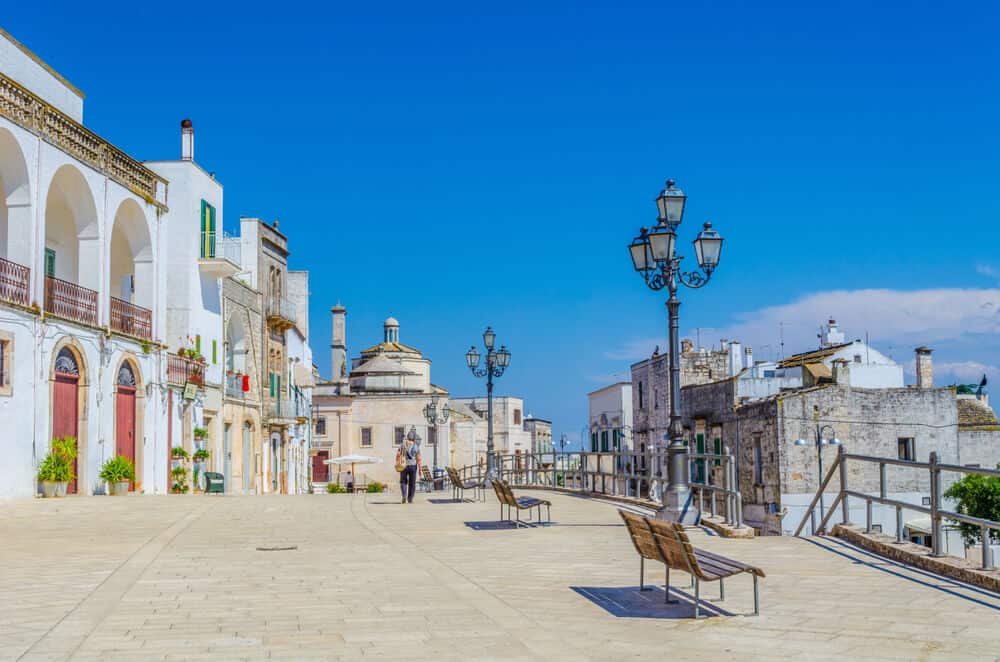
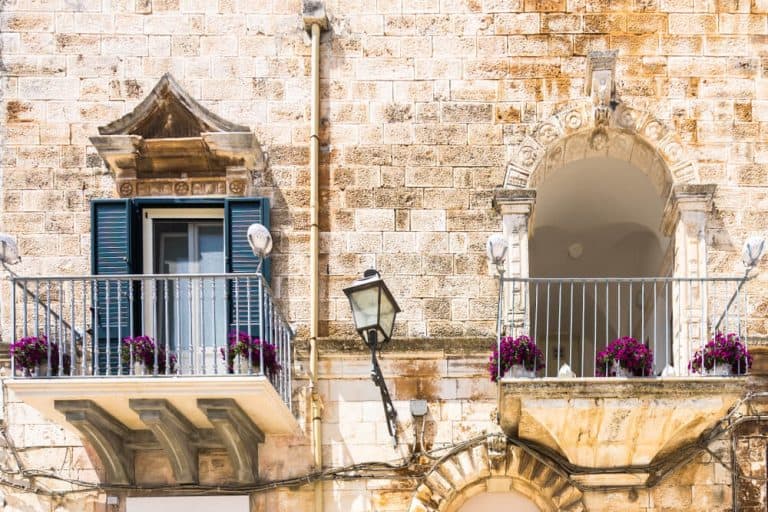
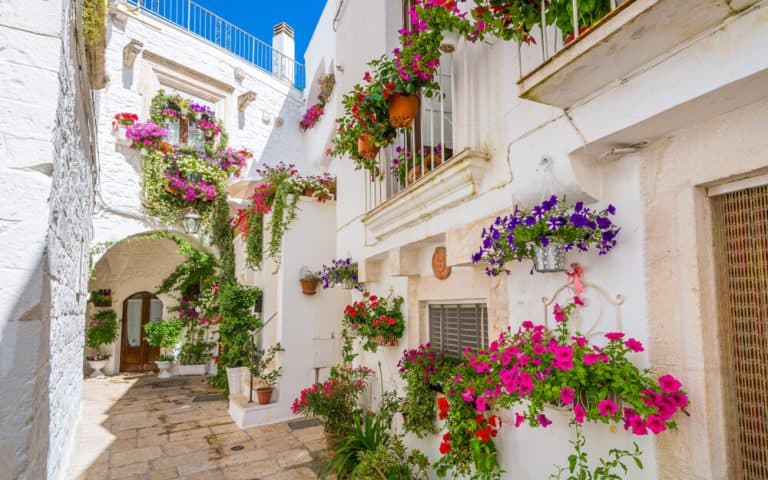
Cisternino is one of 14 borghi piu belli in Puglia. Once you have moved beyond its bland outskirts to the historic centre, it’s easy to see why. Brightly coloured flowers are festooned over every balcony, contrasting with the whitewashed walls of its buildings. Its elevated position 400 metres above sea level also means that it enjoys terrific views over the rolling Apulian countryside.
Enter through the most impressive of Cisternino’s gates – the Porta Piccola – and simply meander through its charming alleyways and lively squares. Visit some of Cisternino’s historic buildings as you pass by. These include the Church of San Nicola di Patara, the Palazzo Amiti, the 13th century 17 metre high Norman-Swabian tower (Torre Grande), the Baroque Church of San Cataldo and the Sanctuary of Madonna d’Ibernia which sits 3 km from the historic centre. And then relax and enjoy a drink in either the Piazza Vittorio Emanuele or in the Villa Communale, which is the main park in the town.
Cisternino is definitely a very instagrammable town in Puglia. Keep an eye out for the many swings around the town and for the numerous quotes and poems written on the walls.
Read our Cisternino travel guide to find out more.
Tips for navigating the city
Cisternino Citta is the train station closest to the historic centre of Cisternino. It’s a 20 minute walk from here to the heart of the town. Incidentally, avoid Cisternino station on the main train line between Bari and Brindisi – it is miles from the town! If you are using the main train line, you could opt to disembark in Fasano and then take the bus from here to Cisternino.
If coming by car, it can be difficult to park in Cisternino, particularly during one of the many festivals that it hosts. The most popular of these is the Festa di San Quirico in August. Cisternino also hosts events as part of the International Music Bands Festival which is held in the Valle d’Itria each July. And there are a number of food festivals too including the Chestnut Festival in October.
However free parking can be found near the train station on the Via Antonelli and the Via Arenazza.
Once there, it only takes 1-2 hours to see the main sights in Cisternino. That said, we recommend you allow 3-4 hours to enjoy the town at a slower pace.
Accommodation and dining recommendations
We recommend you find a Puglia villa near Cisternino rather than staying in the centre of the town. You’ll enjoy more private space.
Cisternino is famous for its barbecuing butchers known locally as fornelli pronti. These butchers shops offer a grilling service. Simply pop in, choose your meat and they will cook it up for you on their open air barbecue. You can then tuck in straight away, either at their outdoor seating area if they have one, or on a nearby bench. We recommend you opt for the bombette – pork meat rolled and wrapped around ingredients such as ham and cheese. Zio Petro is a recommended option if you want good food with seating on site, as is La Rosticceria L’Antico Borgo.
To stock up on the freshest local ingredients to cook up a feast in your Puglia villa, head to Cisternino on a Monday or Thursday morning to enjoy the lively weekly market.
Luxury holidays in Lecce
Introduction to Lecce
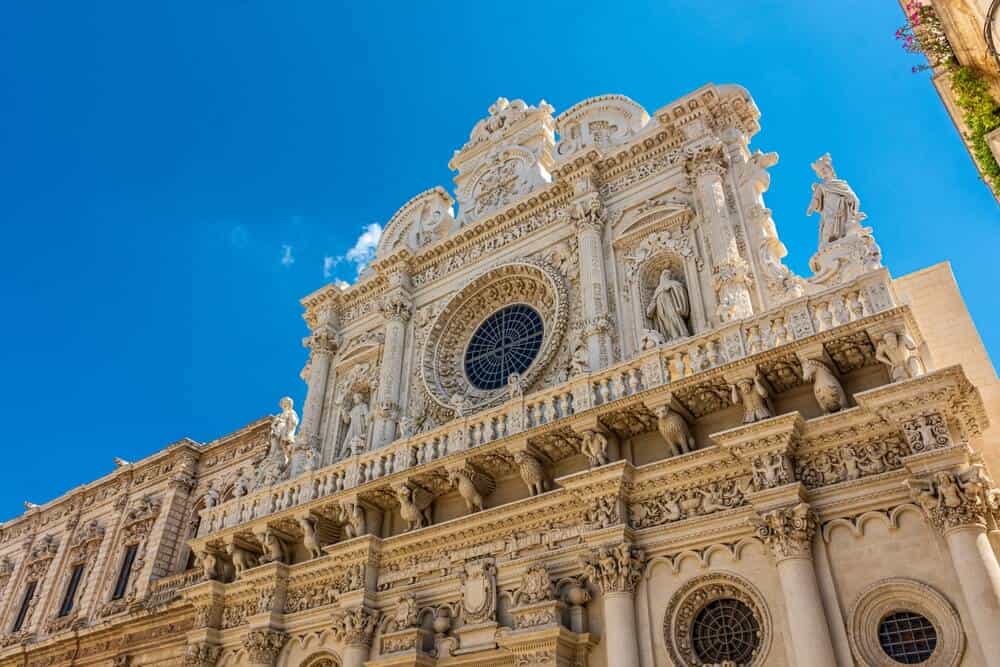
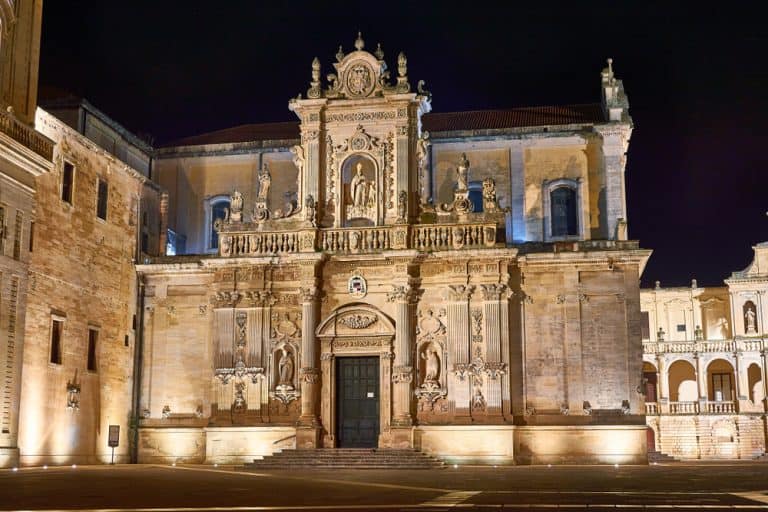
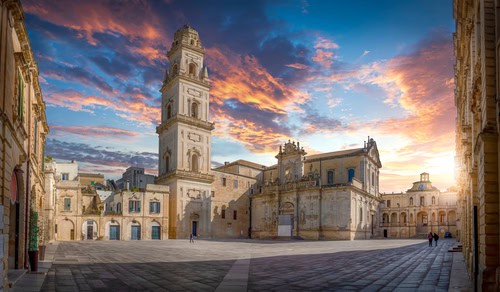
Affectionately referred to both as the Florence of the South and as Puglia’s Baroque Jewel, Lecce has quite a different vibe to other towns and villages in Puglia. Its historic centre is bursting with charming piazzas and beautiful piazzas, bustling cafes and restaurants and interesting independent shops and boutiques.
Worth seeing in Lecce is the Roman amphitheatre, that sits beneath the statue of Saint Oronzo (Lecce’s patron saint) in the Piazza Sant’ Oronzo. Built in the 2nd century BC and excavated after WWII, this would once have hosted gladiator battles watched by up to 20,000 spectators.
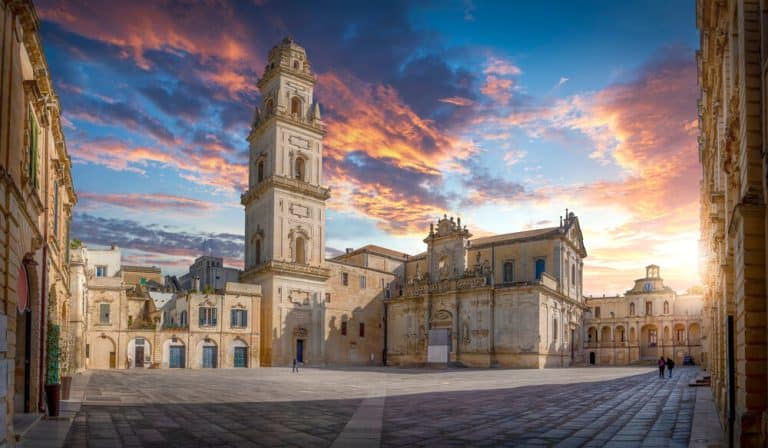
Lecce also has a number of churches worth visiting. Lecce’s Duomo dates back to 1144 but the 70 metre tall bell tower was a later 17th century addition designed by Giuseppe Zimbalo. Enjoy the elevator trip up the bell tower to enjoy the views over the city from the top. And spend time people watching in one of the cafes that line the Piazza del Duomo.
Just as beautiful is the Basilica di Santa Croce, widely regarded as the most beautiful example of the Baroque style anywhere in Italy. Its facade is incredibly intricate and it is not surprising that the church took 150 years to build. The interior is just as stunning with a carved wooden ceiling not dissimilar to the Pantheon in Rome.
Other Baroque churches in Lecce include the Churches of San Matteo, Santa Chiara and San Giovanni Battista. And the Church of Saints Niccolo and Cataldo is a fascinating mix of both Norman and Baroque styles.
Other buildings in Lecce include the Palazzo dei Celestini, a Zimbolo masterpiece. This was once a convent but is now the seat of local government. On the other side of this sits Lecce’s main park – the Villa Comunale which is the perfect spot to enjoy a passeggiata. And, last but not least, is the Castello di Carlo V. This castle was originally built by the Normans in the 12th century but was enlarged extensively by the Holy Roman Emperor Charles V. It can claim to be Puglia’s largest castle. Used as a prison, military barracks and a court over the years, these days it hosts cultural and artistic events. It is also where you will find Lecce’s papier mache museum.
Incidentally, you can usually expect to find Lecce sleepy during the day but it comes alive from the late afternoon and early evening onwards.
Tips for navigating the city
Lecce is easy to reach by train. The train station in Lecce is Piazzale Oronzo Masari. Situated 1.3 km away, it is a 15 minute walk from the historic centre. The journey by train from Brindisi to Lecce is just 30 minutes and from Bari just 1.5 hours. Direct trains also run to Lecce from Foggia and Ostuni. You can also reach Lecce by bus. Again, the main bus terminal is a little way from the historic centre.
If coming by car, you will also need to park outside the historic centre but there are plenty of options whatever direction you enter the city. There are car parks in Lecce on the Via Antonio Gramschi and Via Vincenzo Balsamo as well as in the Foro Boario in the Piazza Carmelo Bene. The parking on the Viale dell’ Universita in Lecce is also very convenient as is the parking on the Via Benedetto Croce. All are an easy walk into the historic centre. Even closer to the centre of Lecce but still outside the ZTL is the Parcheggio Torre del Parco on Via Adua, the car park on the Via Liborio Salomi and the Parcheggio Piazza Mazzini.
Once in Lecce, it’s not necessary to have a car. The city is easily explored on foot.
Accommodation and dining recommendations
Lecce has a number of culinary specialities. These include the refreshing Caffe Leccese. Also referred to by locals as caffe in ghiaccio con latte di mandorla (iced coffee with almond milk), it’s deliciously refreshing on a hot Summer day in Puglia. We recommend you have one for breakfast with a pasticciotto – a scrumptious flaked pastry treat, most commonly filled with custard but other fillings are available. For lunch, grab a Rustico Leccese from a local cafe. This is a savoury pastry round, usually filled with tomato and mozarella. But again, other stuffings are available. Other street foods in Lecce include pucce. A puccia is a grilled sandwich made from bread probably most comparable to pitta.
In our opinion, the best cafes in Lecce to try puccia are L’Angolino di Via Matteotti and Antica Pucceria Giannone dal 1941. In business for over 80 years, Giuseppe is the 3rd generation owner of this fantastic sandwich business. Stamp your own mark on the place by leaving a handwritten review on the wall when you’re there!
You can also buy sandwiches at Pizza & Co in Lecce. However, for us, this is the place to enjoy the best pizza in Lecce. Informal, it’s ideal for a quick slice of pizza in between seeing the sights. Finish off your meal with a gelato from Baldo Gelato, our favourite gelato shop in Lecce.
It’s not all street food in Lecce though. There are numerous fine dining options in Lecce as well. Our recommendations would be Gimmi or Duo if you’re looking for more formal fare.
If staying in Lecce, opt for a hotel or B&B in Lecce or a Puglia villa rental.
Luxury holidays in Locorotondo
Introduction to Locorotondo
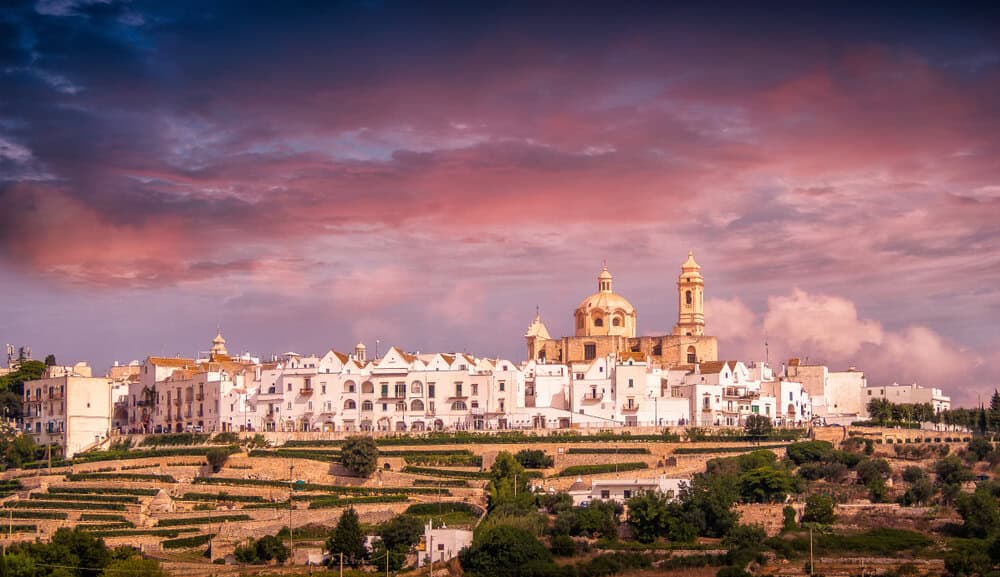
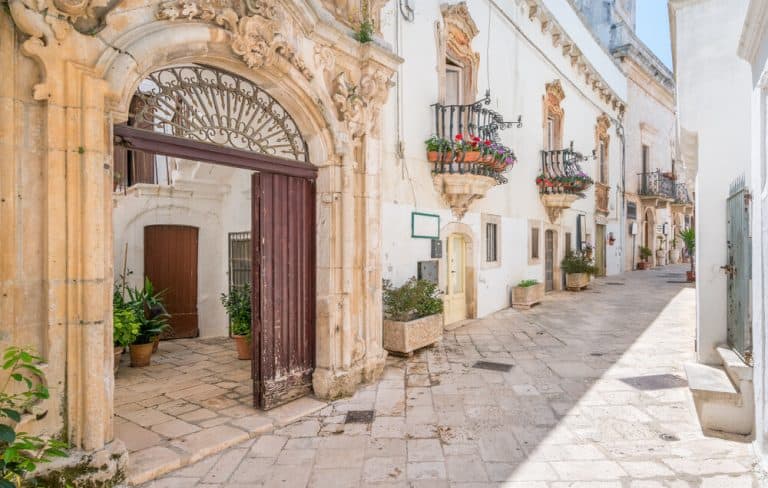
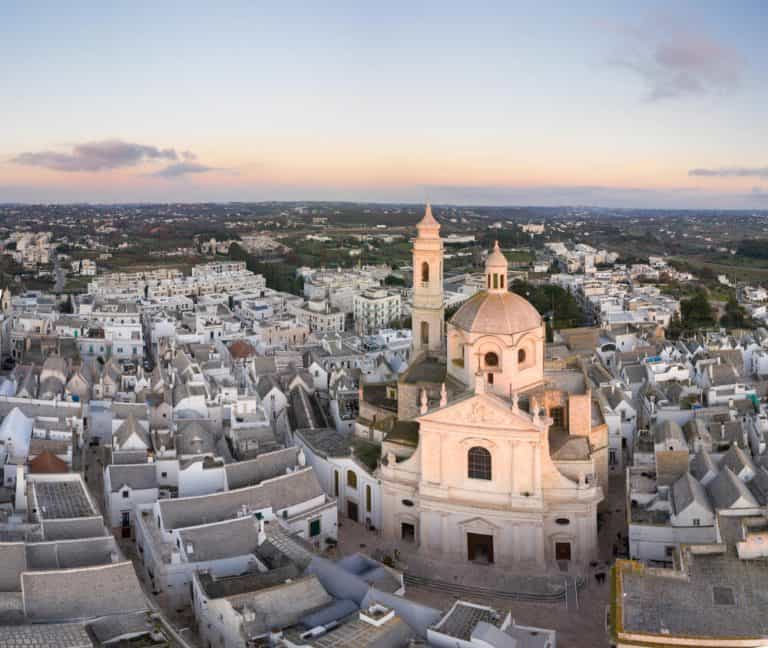
The smallest (but arguably prettiest) of the Puglia towns and villages in our Puglia travel guide, Locorotondo takes its name from the circular plan of the town. Nestled between Ostuni and Alberobello, it’s not dissimilar to Ostuni with its white-washed walls, but its buildings are very distinct from those in Alberobello. Its tall, narrow, rectangular shaped houses (cummerse) with their pointed gabled roofs contrast completely with the trulli nearby. Often affectionately referred to as the ‘balcony of the Valle d’Itria’ thanks to its elevated hilltop position and wonderful views over the surrounding valley, Locorotondo is a picture perfect town, where window boxes festooned with flowers contrast with the whitewashed buildings behind. Incidentally, for the best views, head to the Lungomare where in the valley below you will see olive groves and vineyards dotted with trulli. Or, to enjoy a meal and to sample the local wine whilst enjoying the view, head to Pavi Wine restaurant.
The charm of visiting Locorotondo is just to spend time wandering through its narrow streets and alleyways. If you’re looking for a holiday souvenir from your Puglia villa holiday, then there are some wonderful boutiques here selling local and handmade goods. However, it’s also worth visiting some of the most notable churches in the town. These include the Romanesque Church of the Madonna della Greca, the Church of San Rocco and the early 19th century Church of San Girgio.
We recommend you also visit the Palazzo Morelli in Locorotondo. A superb example of the 18th century Baroque style, visitors can enjoy a guided tour of the artworks on display inside.
And, of course, just stop and relax in one of the squares or cafes. The Piazza Vittorio Emanuele is the liveliest of the town’s squares.
Find out more about Locorotondo in our A to Z guide to the towns and villages of Puglia.
Tips for navigating the city
Locorotondo does have its own train station. It is located an 11 minute walk from the historic centre (although please note this is an uphill walk). Trains run direct from other nearby towns such as Alberobello and Martina Franca to Locorotondo but, if coming from Bari, you would need to change trains in Putignano. Instead, you might want to consider taking a bus from Bari which is far quicker taking 1 hour and 20 minutes.
The centre of Locorotondo is a ZTL (Limited Traffic Zone). However, you can park in the underground car park just before you reach the historic centre near Piazza Aldo Moro. Alternatively, you can usually find a space on the street near the train station at Via Martiri della Liberta or at Piazza Antonio Mitrano.
Be aware that the busiest day in Locorotondo is 16 August. This is the day when locals celebrate the town’s patron saint – Rocco. Events culminate in a spectacular firework display at midnight.
Accommodation and dining recommendations
In the heart of the Valle d’Itria, situated between Ostuni, Fasano, Martina Franca and Alberobello, Locorotondo is the ideal place to stay in Puglia. Opt for a Puglia villa in the countryside just outside Locorotondo. Or instead, find a B&B or hotel in the heart of Locorotondo at Trip.com. Just be mindful that, during the Summer months, the town will be hot and it’s usually a more comfortable heat in the surrounding countryside or by the coast.
Locorotondo is famous for its production of Bianco Locorotondo DOC. This dry white wine is mostly made using the Verdeca and Bianco d’Alessano grapes. There is also a sparkling Locorotondo Spumante DOC too. The town itself offers numerous opportunities to sample both, not least at Pavi.
Besides Pavi Wine restaurant, our other recommended restaurants in Locorotondo include Il Rosone, a fantastic osteria with both indoor and outdoor seating, and L’Arco dei Tipici. This is a great place for lunch – enjoy a sharing plate of some of the best local produce such as capocollo from nearby Martina Franca, fruit and vegetables from within a 25 km radius, artisan beers as well as wine from Locorotondo itself. Controra offers a similar type of experience. Finally, try U Curdunn (meaning Locorotondo in the local dialect) for some delicious authentic cuisine.
Luxury holidays in Ostuni
Introduction to Ostuni
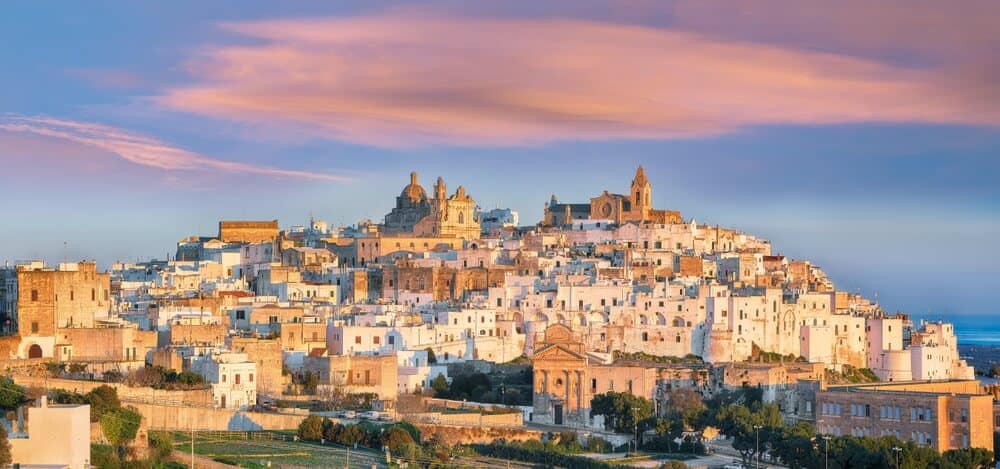
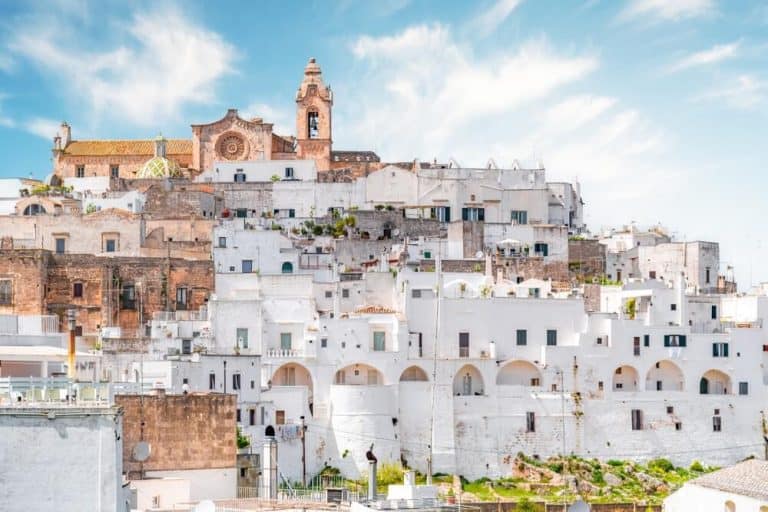
Puglia’s ‘White City’ or La Citta Bianca, Ostuni has a history that stretches back thousands of years to the Palaeolithic period. However, what you see today dates between the 15th and 18th centuries.
At the highest part of the town is Ostuni’s Gothic cathedral – the Basilica Concattedrale di Santa Maria Assunta. It is famous for its elegant rose window representing the 12 months of the year, the 7 days of the week, the 24 hours of the day. However, we think its interior is even more impressive. Also in the piazza is the Palazzo del Seminario and Palazzo Vescovile.
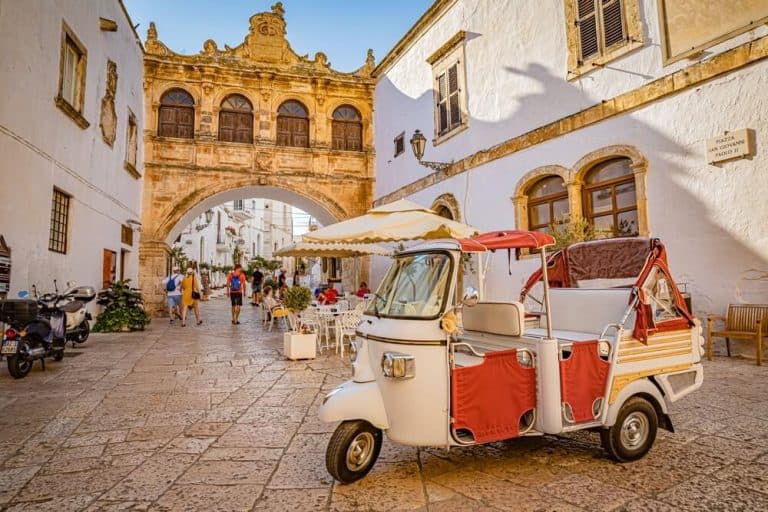
Ostuni is a city that is best explored without a map. Just enjoy wandering around its labyrinth of paths, alleyways and staircases, allowing yourself to get lost. A walking tour of Ostuni is highly recommended to discover the best that the city has to offer. Alternatively, you can also explore Ostuni by tuk tuk.
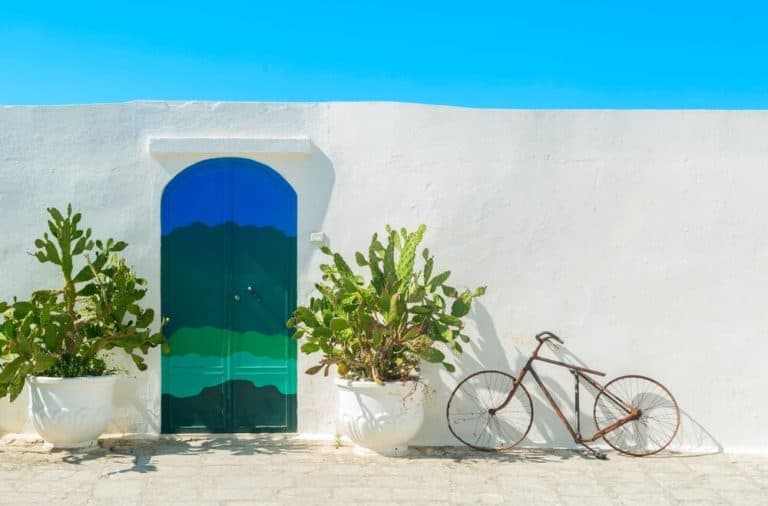
Whilst you explore the streets of Ostuni, look out for the city’s most famous door, painted in shades of blue and green. And, if you have time, visit the city’s museums. These cover millennia of history – one exhibit is the 26,000 year old skeleton of a pregnant Palaeolithic woman who has the nickname of the Donna di Ostuni.
Discover more in our Ostuni travel guide.
Tips for navigating the city
Ostuni is easy to reach both by car or by public transport. Ostuni has its own train station but this sits just over 2 km from Ostuni itself. A bus travels regularly between the station the Cimitero Comunale and Ostuni (as well as also heading to Villanova on the coast).
If coming direct from Brindisi airport, direct trains go to Ostuni every hour or so taking just 20 minutes. From Bari airport, you will need to go to Bari Centrale first and from here you can catch a direct train to Ostuni. The journey time is approximately an hour and 20 minutes.
If coming by car, avoid Ostuni’s ZTL (Zona Traffico Limitato) by parking in one of the many paid parking areas just outside the historic centre and walking in. These include the Parcheggio Comunale Ostuni which is 10 minutes walk from the centro storico. Also convenient for parking in Ostuni is the smaller Parcheggio Tenente Specchia just 5 minutes by foot from the old town, the Parcheggio al Giardino, the Parcheggio Area Genco and the Foro Boario a little futher away. Free parking can be found on the street along Via Pietro Micca. Twenty minutes from the historic centre, this is a little further away.
Accommodation and dining recommendations
Italy Villa Holidays have plenty of villas near Ostuni, providing the perfect base for your Puglia villa holiday. Alternatively, opt for a hotel in Ostuni, within walking distance of its bars and restaurants.
There are some fantastic restaurants in Ostuni. Osteria del tempo perso is a beautiful restaurant built into a cave and with an oven dating back to 1500! And, we think Ostuni is home to Puglia’s best gelateria. We’d make a lengthy detour just to enjoy some gelato from Cremeria Alla Scala! Next best would be Ciccio which also boasts great gelato but also the best cakes and biscuits!
For fine dining in Ostuni, head to Osteria Ricanatti. And for a wide selection of dishes including pizzas, Opera Prima is a great choice.
If you’re looking to cook up a feast in your Puglia villa rental, then head to Ostuni on a Saturday morning between 8 and 1 to shop for produce at the weekly market.
Luxury holidays in Otranto
Introduction to Otranto
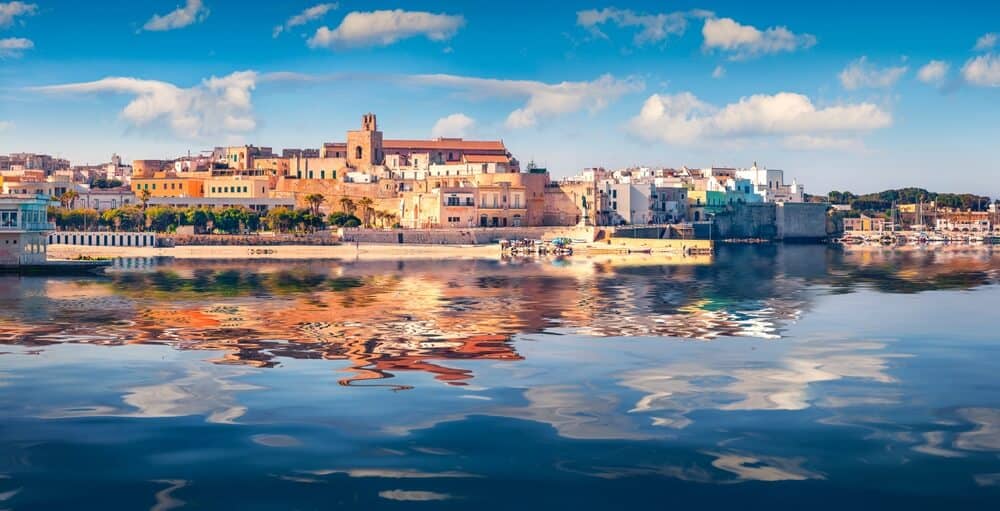
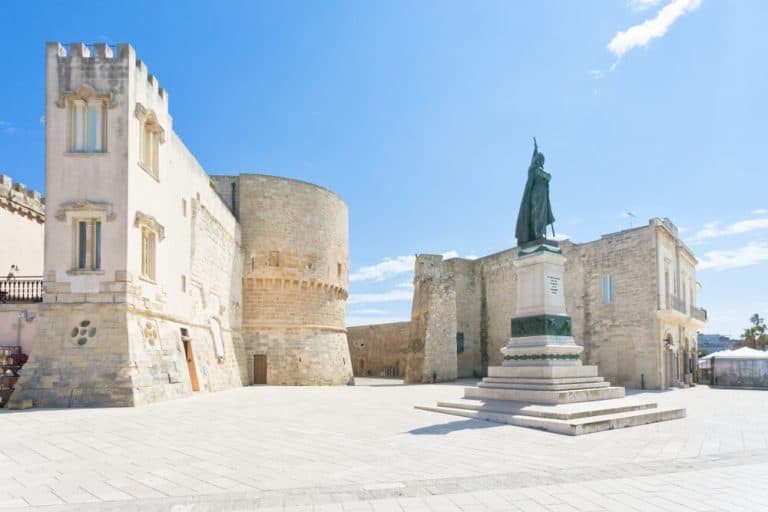
At Italy’s easternmost point, Otranto is a walled city dominated by the thick walls of its imposing castle – the Castello Aragonese. Half faces the cliff edge whilst the other faces inland where it is protected by a moat and keep. Enjoy a tour of the castle and marvel at the spectacular views that it boasts.
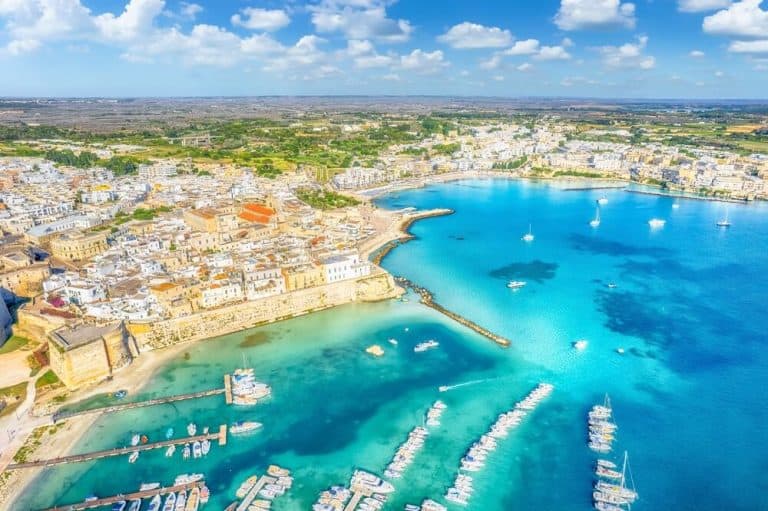
The castle gives way to a picturesque port and a series of charming sea front promenades, lined with fish restaurants and framed by sandy beaches and turquoise waters. These beaches are small and do get easily crowed in the peak Summer months. For a quieter spot, head to the beaches of Baia dei Turchi to the north of Otranto or to the rocky coves of Porto Badisco in the south.
Also just 10 km outside Otranto are the saltwater lagoons of I Laghi Alimini. A stunning natural area surrounded by pine forests and large swathes of sandy beaches, it escapes the mass of tourists and is well worth a visit.
Arguably the main attraction in Otranto itself though is the Romanesque Cattedrale dell’ Annunziata. This is one of the largest churches in Italy and is famous for its 12th century mosaic depicting the Tree of Life. Made using around 10 million tiles, this spans both the main nave and parts of the side nave. With an equally beautiful Moorish style ceiling it’s hard to know whether to look up or down!
Just five minutes walk away is the Byzantine Basilica di San Pietro, a Greek cross-shaped church home to some superb frescoes.
Find out more in our Otranto travel guide.
Tips for navigating the city
Otranto can be reached by rail. However, as it’s not located on the main line but just a branch line operated by Ferrovie Sud Est, be prepared for a slow journey. Once arriving in Otranto by train, there is an 8 minute walk from here to the centro storico.
If coming to Otranto by car, there are a number of car parks. The main parking areas near the waterfront are the Parcheggio Le Palme and the Parcheggio Sant’ Antonio. There is also parking at the Parcheggio Via Orte to the south west of the city.
Accommodation and dining recommendations
A great place for a lunchtime sandwich in Otranto is Posto Fisso, which sells fantastic pucce.
L’Ortale sits in the heart of Otranto. The setting is magical – a fairytale garden where you can sit back, relax and enjoy their wonderful selection of wines and food. Perfect for an aperitivo.
Otranto’s coastal position means it’s perfect for fish and seafood fans. One of the finest fish restaurants in Otranto is L’Altro Baffo. Other excellent Otranto restaurants serving up delicious seafood are Patronale and Ristorante Front Mare.
Luxury holidays in Polignano a Mare
Introduction to Polignano a Mare
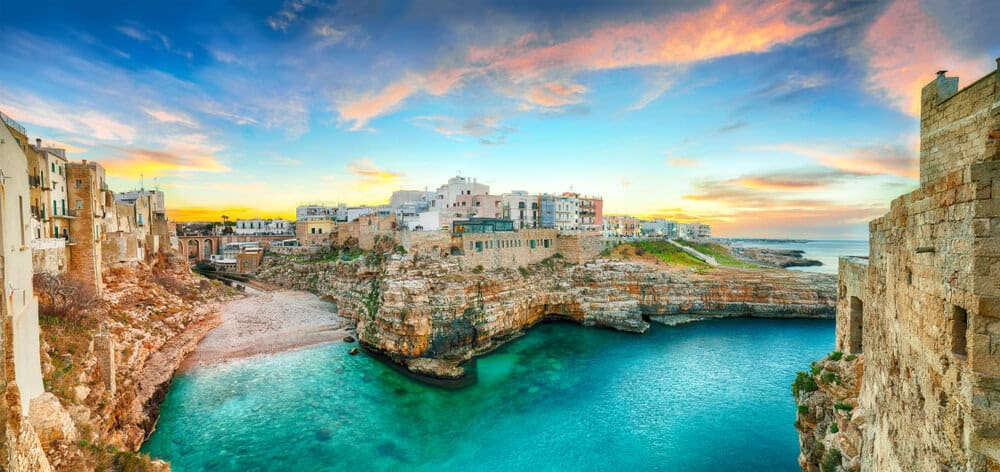
With origins dating back to the Greeks of the 4th century BC and subsequently the Romans, Polignano a Mare has a rich history that is still clearly visible. It’s famous for two main things – cliff diving (the Red Bull Cliff Diving championships have returned here time and time again), and the song Volare (also called Vel Blu Dipinto di Blu), performed by Domenico Modugno. The town is so proud of their famous resident that they erected a 3 metre tall statue of him overlooking the sea.
Enter the Porta Vecchia to reach the centro storico. You’ll soon find yourself in the main square – the Piazza Vittorio Emanuele II – which is home to a Medieval Clock Palace and a 22 metre high bell tower. Narrow streets lead in all directions off this square.
Modugno is not the only famous artist who lived in Polignano a Mare. The poet Guido Lupori was also a resident here. As you explore the town, look out for his poems and verses written on buildings and pavements and signed Guido il Flaneur. Of particular note is the Vicolo della Poesia, a tiny alleyway home to his poetry steps.
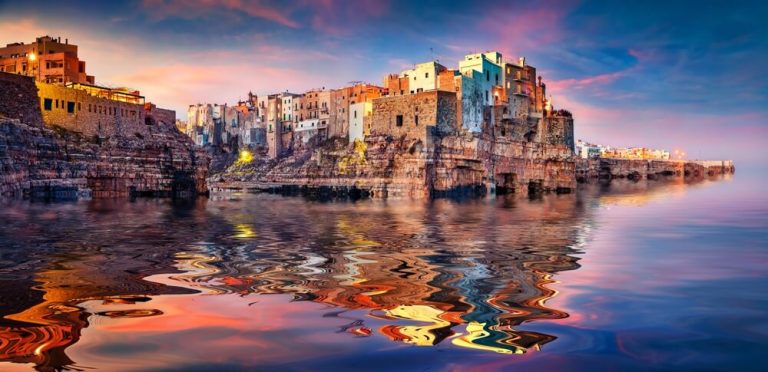
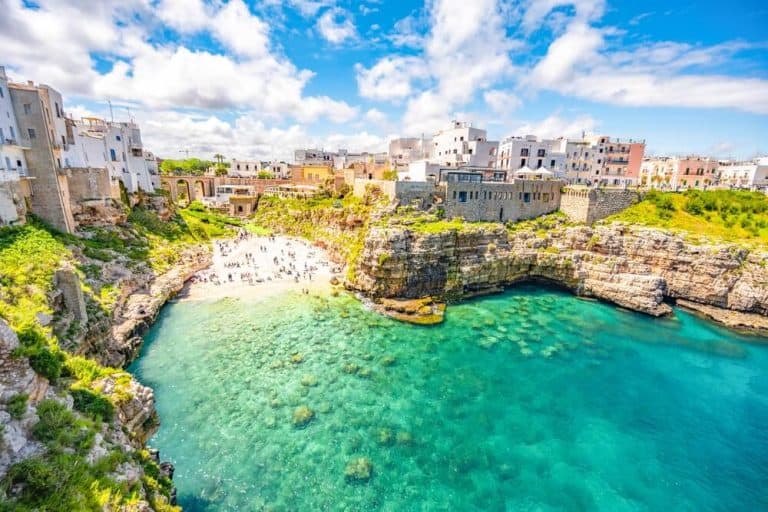
Whichever way you stroll in Polignano a Mare, you’re bound to eventually arrive at one of three panoramic terraces overlooking the sea. Our favourite of these is the Balconata sul Mare which enjoys 180 degree sea views and also includes views of Polignano a Mare’s famous beach.
The Cala Porto is a Blue Flag beach flanked on both sides by steep cliffs. Whilst it is certainly crowded in the Summer months, it’s a must when visiting.
Extend your visit in Polignano a Mare by enjoying a walk along the Lungomare Cristoforo Colombo. You’ll be rewarded with yet more stunning sea views as well as an opportunity to visit the town’s contemporary art museum – the Fondazione Museo Pino Pinelli.
Discover more in our Polignano a Mare travel guide.
Tips for navigating the city
The historic centre of Polignano a Mare is pedestrianised. However for those coming by car, there are parking areas nearby. Marco Polo Parking is about a 5-10 minute walk away. Or you can park at the San Francesco parking area which tends to be quieter. This is a 10-15 minute walk from the centre. If you arrive early enough in the day, you may even be lucky enough to find free parking on Via Martiri di Dogali or Via Caduti di Tutte le Guerre. And there is also a free car park at the train station in Polignano a Mare, open 24 hours a day.
For those coming to Polignano a Mare by public transport, the train station is in Viale Trieste which is 5 minutes on foot to the Piazza Aldo Moro and 9 minutes on foot to the Piazza Vittorio Emanuele II. Incidentally, if you’re coming by train from Bari, we recommend you try and get a seat on the top left hand side of the train to make the most of the views en route.
Bus companies serving Polignano a Mare include Flixbus, Marinobus and Ferrovie del Sud Est.
Accommodation and dining recommendations
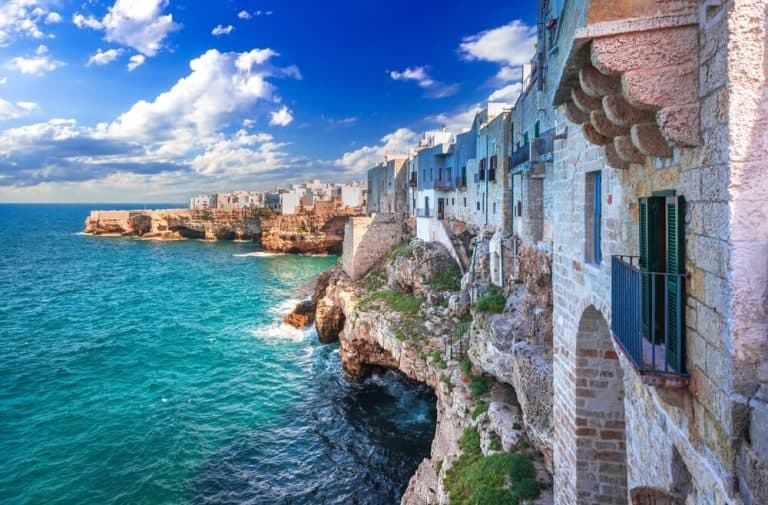
There is no doubt that the most famous restaurant in Polignano a Mare is the Ristorante Grotta Palazzese. A quick look at the reviews and you will see that this place has quite a marmite effect – you’ll either love it or hate it! What is for certain is that this place isn’t cheap – you’re certainly paying a premium for the incredible cave setting. We recommend you read the reviews and make up your own mind as to whether you want to try it.
Less controversial and highly recommended restaurants in Polignano a Mare include Antiche Mura and Terrazze Monachile which has a wonderful terrace with sea views. For the best gelato, definitely head to Gusto Caruso on Via Martiri di Dogali.
Ready to find your dream luxury holiday villa in Puglia?
Whether you picture yourself strolling through the whitewashed lanes of Ostuni, watching the sunrise over the cliffs of Polignano a Mare, or relaxing beside your private pool surrounded by ancient olive groves, your ideal Puglia retreat is just a click away.
With its sun-drenched coastline, charming towns and some of Italy’s most authentic food and wine, Puglia is a truly special place to spend a holiday. We handpick every property to ensure your stay is exceptional. Explore our curated selection of luxury villas in Puglia today and take the first step toward your ultimate escape, then take a look at our guide to the best things to do in Puglia to start planning your days.
Have questions or need personalised recommendations? Contact our team, we are always happy to help!